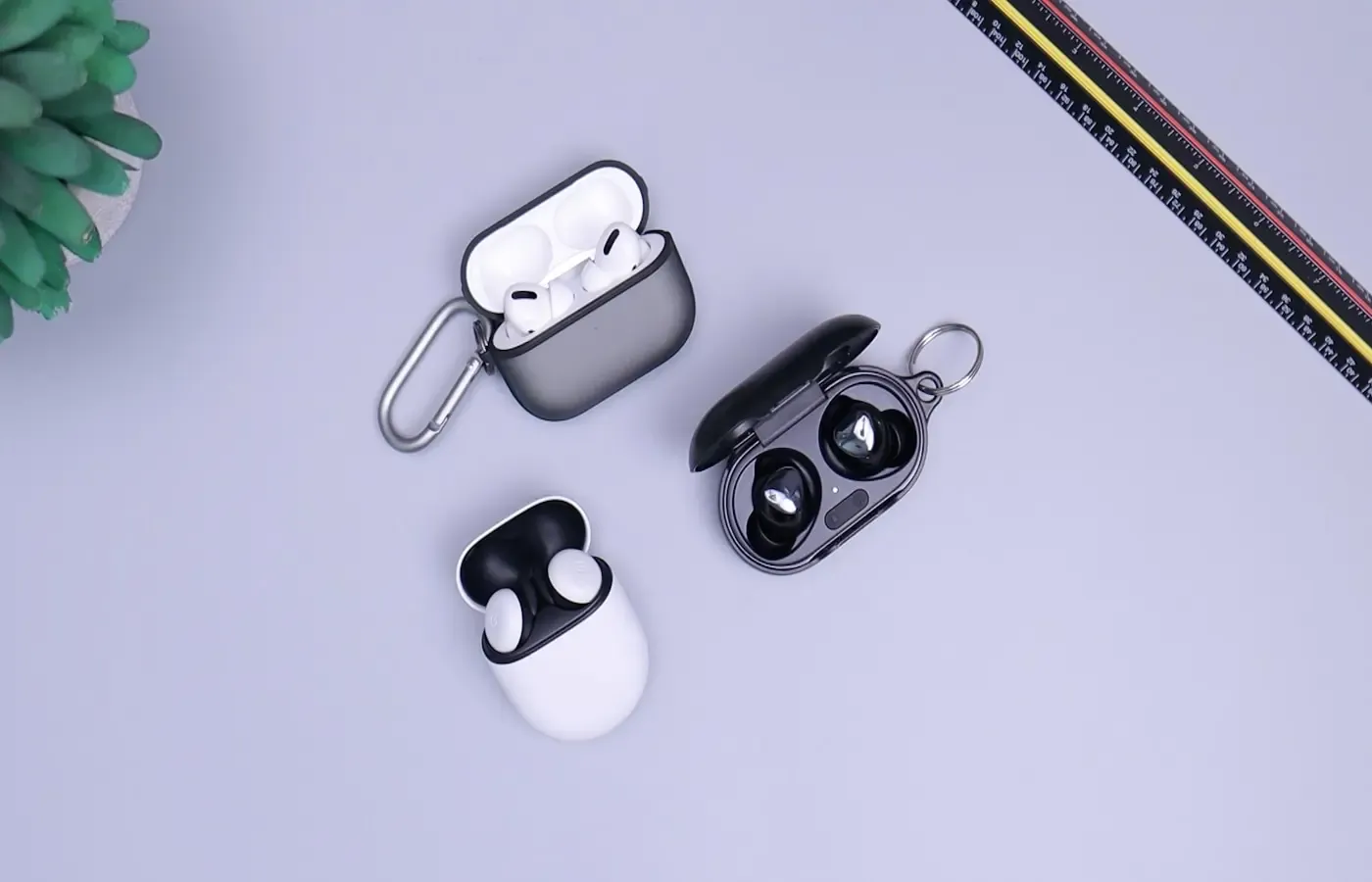
A pair of wireless earbuds can fail three times over. The buds contain their own batteries and electronics; the charging case contains another battery, a port, contacts and control circuitry; software has to recognize and coordinate the pieces. One weak link can sideline the whole set.
That does not make every pair irreparable. Nor does a successful teardown prove that ordinary repair is practical. The useful question is whether the product provides a credible route back to working order: safe access, replaceable parts, instructions, compatible replacements and a way to reassemble the device without creating new faults.
The evidence available here is narrow. It includes an independent teardown analysis of two Fairphone designs and marketplace listings for selected replacement parts. It does not establish how common repairable earbuds are, how long their batteries normally last or whether any particular repair will succeed. Manufacturer pairing instructions, service prices, warranty terms and firmware-support commitments are also absent. Those omissions matter because physical repair is only one part of restoring a wireless system.
Repairable is not the same as technically openable
Almost any small electronic product can be opened if damage is acceptable. A specialist might cut an adhesive seam, break clips, drill out a plastic fixing or transplant a component from another unit. That is technical possibility, not consumer repairability.
A meaningfully repairable product needs more:
- The enclosure can be opened without destroying it.
- Batteries and other wear parts can be disconnected rather than cut or desoldered.
- Suitable replacement parts are identifiable and obtainable.
- The procedure is documented well enough to avoid guesswork.
- The product can be closed again with its fit and basic functions intact.
- Replacement buds and cases can be paired into a working set.
The distinction is unusually clear in iFixit’s analysis of Fairphone’s earbuds. The organization awarded the newer Fairbuds a 10/10 repairability score, while reporting that the earlier Fairphone True Wireless Earbuds scored 1/10. According to iFixit, the older design used soldered batteries and a soldered charging port, along with plastic rivets and clips. The newer model was designed for repeatable access and replacement.
Those scores belong to iFixit’s method and to the named models; they are not an industry standard. A teardown also cannot establish long-term reliability, sound quality, comfort or whether repaired water resistance will match factory condition. It does establish something narrower and useful: sealed, destructive construction is not an unavoidable property of true-wireless earbuds.
The battery sets the limit; construction determines the remedy
Rechargeable batteries are wear components. When earbud runtime becomes too short for the job, a healthy speaker, microphone and circuit board may be stranded behind a depleted cell. The same applies to the larger battery in the charging case.
Yet short runtime does not diagnose the battery by itself. Dirty charging contacts, a damaged cable or port, failed case electronics, software behavior and uneven charging between buds can produce similar symptoms. Remote research cannot determine whether a particular set has battery wear, liquid damage or an electronic fault.
Once battery failure is established, construction becomes decisive. A cell connected by a plug and reached through reusable fasteners presents a controlled service task. A cell buried behind adhesive, solder and one-use clips makes the same nominal repair more difficult and more likely to damage the enclosure or nearby components.
This is where the word “replaceable” needs discipline. A battery sold online is not necessarily a practical replacement. The supplied research snapshot included a case-battery listing for the Sony WF-1000XM4 and another for the Bose QuietComfort Earbuds charging case. These listings show that sellers advertised model-specific components. They do not prove that the batteries are manufacturer-authorized, straightforward to install, continuously available or suitable for a case variant with a similar name.
Nor should the existence of a component be treated as a repair guide. Opening a compact enclosure containing a lithium battery is not a routine reader procedure without authoritative instructions, appropriate tools and a clear method. If access requires prying around the cell, soldering or reconstructing a sealed case, independent professional service may be the more defensible route—if such service exists and its cost makes sense.
The charging case is half the product
The case is often described as an accessory, but functionally it is part charger, part power bank and part system controller. Healthy earbuds may become inconvenient or unusable if the case battery, charging port, contacts, hinge or electronics fail.
There are two different remedies, and they should not be confused:
- Repair the original case. This preserves the existing case and may require replacing its battery, port or another internal component. Feasibility depends on access, documentation and technician skill.
- Replace the complete case. This avoids internal battery work but introduces questions about model compatibility, charging behavior, pairing and condition.
A complete replacement is often conceptually simpler: place the existing buds in a known-compatible case and enroll or reset the set as required. But “looks identical” is not a compatibility specification. Products with similar names can differ by generation, region, connector, radio behavior or firmware.
One marketplace page in the research package advertised an Oppo replacement charging case with pairing support. That is a seller’s compatibility claim, not manufacturer documentation. The supplied page information was also too generic to establish the exact supported variants. It is better treated as evidence that complete replacement cases are marketed than as assurance that a particular mixed set will work.
Before buying any case, match the full model number—not merely the family name—and obtain the pairing procedure in writing. Check condition, return rights and whether the seller guarantees operation with two existing buds. If those answers are vague, the apparent shortcut may become another unusable component.
A replacement bud still has to join the system
Loss and asymmetric failure create another possibility: replace only the left or right earbud. A secondary market does exist. For example, ReCellExchange advertises individual replacement parts across named AirPods, Pixel Buds and Bose generations.
That listing cannot establish authenticity, battery condition, pairing success or manufacturer support. It does, however, expose the right consumer question. You are not buying an isolated speaker; you are buying a component that must join an existing system.
Verify all of the following before ordering:
- exact product generation and left-or-right designation;
- charging-case model and connector variant;
- the documented reset or enrollment process;
- whether mixed components need matching firmware;
- whether the replacement can receive current updates;
- battery condition for a used or refurbished part;
- the return remedy if pairing fails.
The research available here contains no authoritative pairing or firmware policies for the named brands. It would therefore be unsafe to infer compatibility from appearance or from a seller’s broad product-family label. Continued app and firmware support is something to verify, not a demonstrated cause of failure in these particular products.
This is also why a used component deserves different scrutiny from an ordinary used product. Its low price may reflect prior battery wear, and that wear is difficult to judge from photographs. A seller who identifies the exact model, tests pairing and offers a meaningful return period provides more useful information than one who merely says “compatible.”
Warranty replacement, paid service and repair are different exits
When a manufacturer replaces an entire set under warranty, the consumer’s immediate problem may be solved. That does not mean the original product was repaired at component level. The distinction matters when judging durability and what happens after coverage ends.
A sensible sequence is:
1. Rule out reversible faults
Follow the maker’s instructions for cleaning contacts, checking the charging cable and power source, resetting the product and updating its software. Do not introduce liquid, abrasives or tools unless the official procedure calls for them.
2. Check warranty and statutory remedies
Use the policy for your model, purchase date and country. Battery coverage, accidental-damage exclusions and replacement fees can differ. A retailer’s return policy applies to that retailer; it is not a substitute for the manufacturer’s warranty.
Consumer-law rights may exceed a written warranty in some jurisdictions. Because no official market-specific legal documents were supplied for this article, readers with a disputed claim should consult the relevant consumer authority rather than assume the warranty is the final word.
3. Ask what paid service actually provides
“Service” may mean component repair, replacement of one bud, exchange of the case or replacement of the entire set. Ask for the total price, the warranty on the serviced item and whether the returned components will be new, refurbished or your originals.
4. Price a complete component
A known-compatible replacement case or single bud may involve less risk than opening a sealed unit. Include shipping, diagnostic fees and the possibility of a failed pairing attempt—not just the advertised part price.
5. Consider independent repair
This is strongest when the fault is known, the part is available, the procedure is non-destructive and the remaining components are in good condition. It is weaker when diagnosis is uncertain or several batteries have aged together.
When does repair make sense?
No universal price threshold settles the question. The relevant comparison is between the full cost and risk of restoration and the useful service likely to remain.
| Situation | Most credible next step | Main check |
|---|---|---|
| Product is still covered | Warranty or statutory claim | Whether the remedy is repair, component exchange or whole-set replacement |
| Case fails but both buds work well | Price an official or guaranteed-compatible case | Exact model, pairing process and return rights |
| One bud is lost or faulty | Consider a matching single bud | Generation, side, firmware and battery condition |
| Battery is accessible with documented parts | Repair or professional service | Tools, total cost and reassembly consequences |
| Battery is sealed behind destructive construction | Compare specialist repair with replacement | Damage risk and condition of the other batteries |
| Diagnosis is uncertain | Seek diagnosis before ordering parts | Avoid paying for a battery that does not address the fault |
| Several components are worn or damaged | Replace the set, buy used with care or defer purchase | Whether further spending is likely to restore dependable use |
Keeping the current pair is valid when the remaining runtime still covers the task. A small decline may matter little for short calls or occasional listening. Conversely, repeated charging can make an otherwise functioning set unsuitable for travel or long work sessions.
Repair is not automatically cheaper or environmentally preferable. That conclusion would require a defined comparison including parts, transport, failed attempts, expected remaining life and the replacement product. The defensible claim is simpler: serviceable construction preserves options that destructive construction removes.
What to demand from the next pair
Repairability is easiest to buy before it is needed. Product pages often emphasize listening time and noise cancellation while leaving ownership questions unanswered. Treat an absent answer as uncertainty, not as proof of either good or bad support.
Look for:
- independently accessible batteries in both buds and case;
- screws or reusable fasteners rather than destructive seams;
- official replacement buds, cases and batteries with published prices;
- model-specific repair or replacement instructions;
- a documented process for pairing mixed components;
- clear paid-service terms after warranty;
- a stated software and firmware support policy;
- return rights for replacement parts;
- an end-of-life or recycling route appropriate to battery-containing electronics.
Fairbuds provide a documented counterexample to the idea that all true-wireless designs must be sealed. But iFixit’s repairability result is not a complete buying verdict. The available evidence here does not compare their sound, comfort, endurance, durability or value with conventional alternatives, and current parts availability, supported markets and warranty terms would need to be checked before purchase.
The bounded judgment is this: wireless earbuds can be repaired, but only some are designed and supported so that repair is repeatable rather than heroic. Before replacing a failed set, identify whether the bud, case or software is at fault; use warranty and service routes first; and buy a replacement component only when model compatibility and return rights are clear. For the next pair, regard battery access, spare-part support and pairing documentation as real product features—not administrative details to discover after the music stops.
Sources & methodology
This analysis uses the supplied research snapshot dated September 4, 2026. Its principal independent source is iFixit’s comparison of Fairbuds with Fairphone’s earlier True Wireless Earbuds. Marketplace pages are cited only as evidence that sellers advertised particular categories of replacement component; they do not verify authenticity, installation safety, compatibility or successful repair.
The supplied material did not include the iFixit article’s publication date, official manufacturer pairing procedures, market-specific warranties, service prices, firmware-support commitments or recycling policies. No first-party product testing was conducted. Long-term reliability, battery condition, water resistance after opening and the economics of an individual repair therefore remain case-specific.