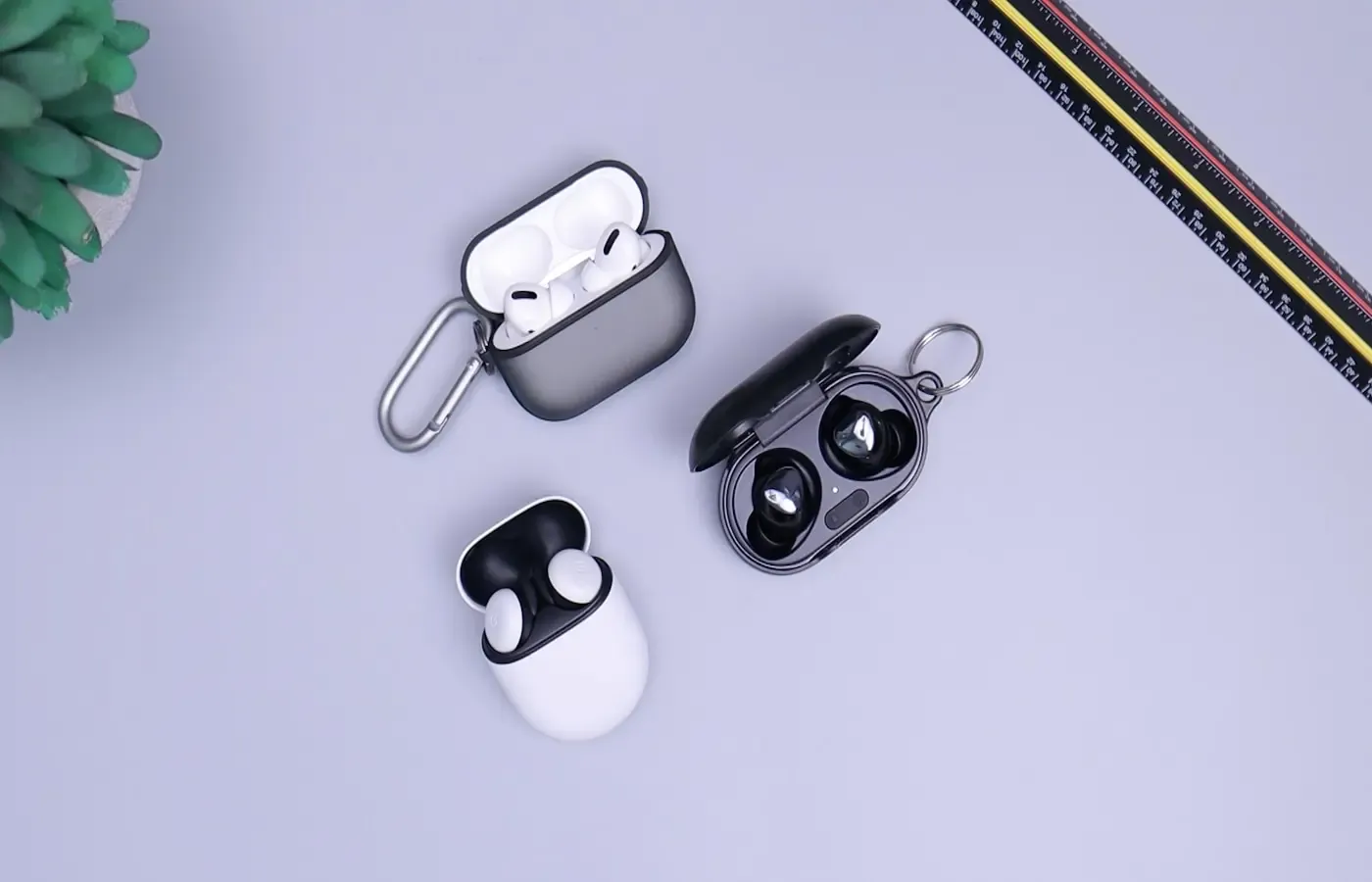
A wireless earbud can appear to have a simple problem: it no longer lasts through a commute, one side dies early, or the charging case seems permanently flat. But asking whether you can replace the battery is not quite like asking the same question about a phone, laptop or even many over-ear headphones.
The answer is usually model-specific. Two earbuds of similar size may be built in entirely different ways: one may open with clips and contain a recognisable cell; another may be welded, glued or sealed so tightly that getting inside destroys the housing. A battery can be physically replaceable yet still be a poor repair if the right part is unavailable, the work requires delicate soldering, or the case and the other earbud are near the end of their lives too.
That is frustrating, but it gives you a more useful question than “Are wireless earbuds repairable?” Ask: can this exact earbud, in this condition, be restored at a sensible cost and risk?
The available public evidence is limited. This guide does not establish repairability for every current model, and it should not be used as a substitute for a service manual, a parts catalogue or a repairer’s assessment of your particular pair. It is a method for separating documented repair routes from hopeful assumptions.
Start with the model number, not the shape of the earbuds
“Wireless earbuds” covers products with radically different construction. Brand, product family and appearance are not enough to identify a repair path. Find the full model number for the earbuds and, where applicable, the charging case. It may be printed on the case, in the companion app, in Bluetooth settings, on the original packaging or in account and support records.
This matters because a product line can change its construction between generations, and because the earbuds and case may have separate model numbers. A repair guide for an earlier version is not evidence that a later version opens the same way.
Before treating battery replacement as the answer, narrow down the fault. A shorter runtime may indeed point to an aging battery, but an earbud that will not charge can also have a dirty contact, a poorly seated ear tip or fit issue that affects charging position, a depleted case, a damaged cable, a failed case port, a pairing fault, or a software setting that changes expected behaviour.
A careful first pass is inexpensive and reversible:
- Charge the case with a known-good cable and power source.
- Inspect the earbud and case contacts for visible debris or residue, then clean them gently with a dry, non-abrasive method appropriate to the manufacturer’s guidance.
- Charge each earbud in the case and check whether its indicator or app reports a different state from the other.
- Test each bud separately, if the product permits it, rather than assuming that a pair-wide problem has one cause.
- Check for official troubleshooting and firmware guidance for the exact model before opening anything.
- Note whether the issue is reduced listening time, failure to charge, random shutdown, unreliable pairing or a case that cannot hold a charge. These are different symptoms, even if they feel similar in daily use.
Do not infer a dying battery simply because one bud is weaker. A charging-contact fault can leave one earbud partially charged; a battery fault tends to show itself after the bud has actually charged and then loses power unusually quickly. That distinction will not diagnose every case, but it can prevent an unnecessary destructive attempt to open a product.
If the earbuds are still within a warranty period or covered by a retailer, service arrangement or consumer-protection remedy, start there. Opening a sealed device can complicate a later claim, and a documented replacement route may be preferable to a home repair.
What repairability evidence can actually tell you
Repairability is not a single property. It is a chain of conditions:
- You must be able to open the product without unacceptable damage.
- You must be able to identify and obtain an appropriate replacement part.
- You must be able to remove and install that part without damaging tiny boards, cables, microphones or antennas.
- You must be able to close the product securely enough for your needs.
- The result must justify the time, expense and risk compared with other options.
The strongest evidence is an official service manual or repair programme that names the model, identifies the part, and explains the service route. An official catalogue showing a separately sold replacement earbud or charging case can also be useful, though it does not necessarily mean that the internal battery is intended to be replaced.
Independent teardown evidence comes next. A teardown can show what lies behind the shell: adhesive, clips, screws, soldered connections and the battery’s markings. It is especially valuable because the fact that an object can be opened is not the same as a manufacturer supporting the work.
iFixit’s wireless-earbud repairability overview illustrates the difference. Its assessment of AirPods says that hardware components cannot be accessed without damaging the device, that the batteries are sealed in, and that official replacement parts and repair instructions are absent. That is evidence about the AirPods models represented in iFixit’s assessment—not a finding that should be extended to every Apple product, every current model or every earbud with a similar shell.
The same iFixit page contrasts the Sony WF-1000XM3. It says the earbud batteries are easily accessed and can be replaced with Z55H coin cells, while both the buds and charging case are held with clips rather than glue. Yet the assessment also says official repair instructions are unavailable and that, apart from the earbud batteries, replacement parts are not available. In other words, access improves the prospects for a capable repairer, but it does not create a fully supported service ecosystem.
That distinction is worth holding onto. A promising teardown may establish that a battery is accessible. It does not establish the quality of third-party parts, the durability of a resealed product, the availability of every component, or a sensible repair price in your market.
A useful evidence hierarchy
When researching a particular pair, work down this list:
- Official repair instructions, service terms and parts catalogues for the exact model.
- An independent teardown of that exact model, preferably with clear photographs and an account of how the housing opens.
- A written quote from an identified repair business that states what it will replace, what it will not guarantee, and whether labour carries a warranty.
- User reports and videos only as leads for questions to ask, not proof that a repair is safe, repeatable or economical.
A video of someone prising open an earbud may reveal where the difficult point lies. It does not prove that the same process will work on your revision, that the replacement cell is appropriate, or that the earbud will survive reassembly.
One phrase, three different battery jobs
“Replace the battery” can mean three materially different repairs. Work out which one you are considering before asking for a quote or buying a part.
Replacing the battery in one earbud
This is the most common scenario when one bud dies much earlier than the other. The practical issue is not just whether the cell can be removed. The repaired bud must still charge, pair and work reliably with its partner.
If the other earbud remains healthy, a single-bud repair may be attractive. But it is worth considering its remaining battery age. If both earbuds were bought together and used similarly, the second cell may not be far behind. That does not make a one-bud repair pointless; it means the repair is best judged as a way to extend useful life, not necessarily as a permanent reset of the whole set.
Some manufacturers or retailers may offer replacement earbuds rather than internal battery service. Where that route exists, verify compatibility for your exact generation and market before ordering. A replacement bud that cannot pair with your existing case or companion bud is not a cheap fix.
Replacing both earbud batteries
Replacing two cells may make sense when both earbuds have clearly lost runtime and the model has documented non-destructive access. It is also the more involved job: two openings, two cells, twice the opportunities to damage a small internal component, and a need to confirm that both buds charge correctly afterward.
This can still be worthwhile when the earbuds otherwise fit well, meet your sound and call needs, and have features you would have to spend more to regain. It is less compelling if the case is unreliable, the microphones are already degraded, or there is no dependable source of suitable cells.
Replacing the charging-case battery
The case is a separate device with its own battery, contacts, charging port and electronics. A case that no longer holds charge can make healthy earbuds seem defective. Conversely, an old earbud battery will not be restored by fitting a new case.
Do not assume that a repairable earbud means a repairable case, or vice versa. iFixit’s WF-1000XM3 summary describes clipped construction for both buds and case, but that is still evidence for that named product, not a general Sony or wireless-earbud rule. Check case-specific documentation and teardown evidence.
Access is only the first hurdle
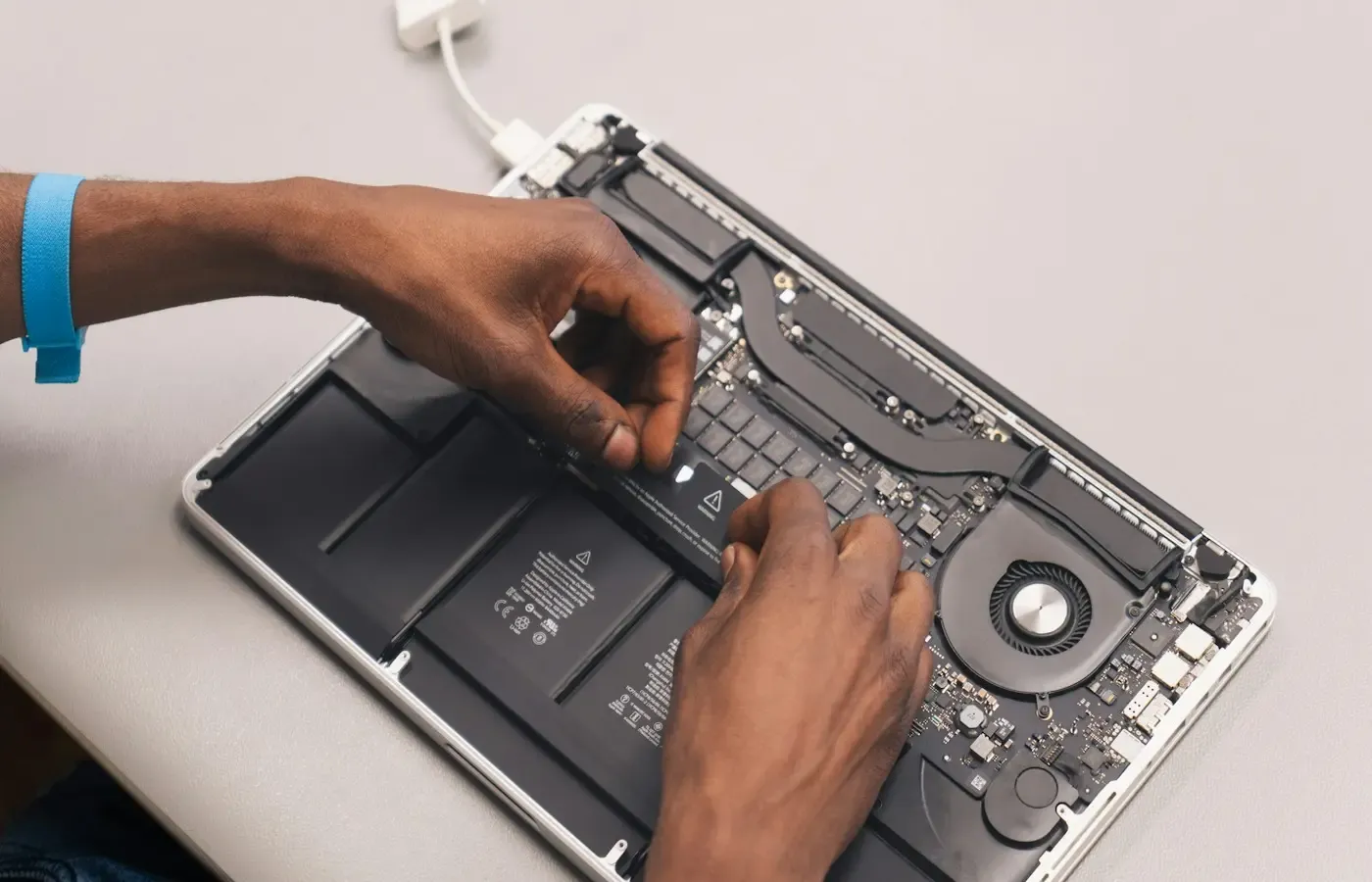
A battery repair begins with opening the shell, but that is where much of the risk lies. Earbuds make poor candidates for casual experimentation because their compact construction leaves little room for error. The housing may contain microphones, touch controls, antennas, charging contacts and fine wires alongside the cell.
The relevant questions are practical:
- Is the enclosure held by screws, clips, adhesive or a welded seam?
- Does opening it require heat, force or cutting?
- Is the battery a recognisable component, or is it soldered or spot-welded into a cramped assembly?
- Is the replacement part identified by a clear specification rather than a marketplace description alone?
- Can the device be closed without crushing a wire, misaligning a microphone opening or damaging a contact?
- Can you test charging, pairing, audio and microphones before treating the repair as complete?
Clips are generally a more encouraging sign than permanent adhesive because they can permit non-destructive disassembly. They do not eliminate the risk of breaking a clip, pinching a cable or reassembling the shell imperfectly.
Water and sweat resistance require particular caution. A product may have had a stated ingress-protection rating when new, but once its housing has been opened, you should not assume that original protection remains. Restoring a seal may require model-specific parts, adhesives, procedures or testing that a home repair cannot reproduce. If you rely on earbuds for exercise, rain or outdoor work, this may be a decisive downside even where battery replacement is physically possible.
Battery sourcing is another limit. A cell that fits inside a shell is not automatically the right part. Capacity claims, dimensions, connector arrangement and protection circuitry all matter, and the research available here does not establish a dependable source for replacement cells beyond iFixit’s model-specific WF-1000XM3 description. Avoid treating a broadly labelled compatible battery as verified simply because it resembles the original.
Compare repair with replacement honestly
Without current model- and market-specific repair quotes, parts prices and replacement prices, there is no responsible universal cost threshold. A better comparison is a short ownership calculation rather than a hunt for the lowest sticker price.
| Question | Why it changes the decision |
|---|---|
| Is the repair route documented for this exact model? | It separates a known procedure from an experiment. |
| Is the failing component definitely the battery? | A battery purchase will not fix a failed contact, port or board. |
| What else is aging? | The other earbud and case may determine how long the repair remains useful. |
| Is a replacement earbud or case available? | Replacing one assembly can be less risky than opening a sealed one. |
| Does a repairer offer written terms? | Labour scope, exclusions and any warranty matter as much as the headline quote. |
| What features would replacement lose or gain? | Fit, controls, multipoint pairing, noise control and app support can have real value. |
| Is used or refurbished equipment an option? | It can reduce cost, but check included case, battery condition and return terms. |
Repair is often most appealing when the rest of the product is still good, the exact model has a credible access path, and the repair cost is bounded. Replacement may be more rational when access is destructive, parts are uncertain, or several components are failing together.
There is also a middle route: replace only the case or one earbud through an official channel, if one exists. This can preserve a working component without asking a repairer to reverse-engineer a sealed assembly.
And sometimes the sensible outcome is to keep what you have. If the problem turns out to be dirty contacts, a cable or a settings issue, the best battery repair is no battery repair. For a future purchase, a dependable pair of wired headphones remains a straightforward exit from the battery-and-case cycle, particularly for listening at a desk, on a commute with a phone adapter, or wherever cable convenience is acceptable.
A buyer’s checklist before earbuds become disposable
Battery life is a buying criterion, but so is the ability to deal with its eventual decline. Before buying a pair of wireless earbuds, spend a few minutes checking what happens after the first few years of ownership.
Look for:
- A support page that identifies the exact product and its service options.
- A repair manual, parts catalogue or clearly explained replacement route.
- Availability of charging cases and individual earbuds, not only whole new sets.
- Clear warranty and out-of-warranty service terms in your market.
- Independent teardown evidence for the specific model, not an earlier generation.
- Construction that permits access without obvious destruction, where independently documented.
- A product you would still be happy to use if battery life becomes merely adequate rather than excellent.
Do not make repairability the only criterion. Fit, sound, call quality, accessibility controls and the simple pleasure of using an object that suits you all matter. But a product that is pleasant for eighteen months and impossible to revive afterward deserves to be judged differently from one with a documented service path.
Is battery replacement worth it?
The bounded answer is that wireless earbud batteries can sometimes be replaced, but there is no safe shortcut from “small rechargeable device” to “repairable device.” The strongest case is a model with documented non-destructive access, an identifiable suitable cell, a working case and partner earbud, and a repair route whose risks you understand.
For sealed products without official parts or instructions, the question is not whether somebody online has opened one. It is whether the likely result is worth sacrificing a working, serviceable shell for. Often, that answer will be no. Sometimes an official replacement component, a careful independent repair or simply fixing the charging fault will be the better outcome.
Before buying parts, identify the exact model, isolate the symptom, and seek evidence that applies to that product—not to wireless earbuds in general.
Sources & methodology
This guide is based on the limited research package supplied for publication. The principal independent source is iFixit’s wireless-earbud repairability overview, used only for the specific observations it reports about AirPods and the Sony WF-1000XM3.
No manufacturer repair manuals, current service prices, parts catalogues, market-specific replacement costs or laboratory tests were supplied. Accordingly, this article does not estimate repair costs, restored battery life, reliability after repair, water resistance after opening, or environmental savings. It also does not generalise the iFixit findings to later Sony models, other AirPods models or wireless earbuds as a category.