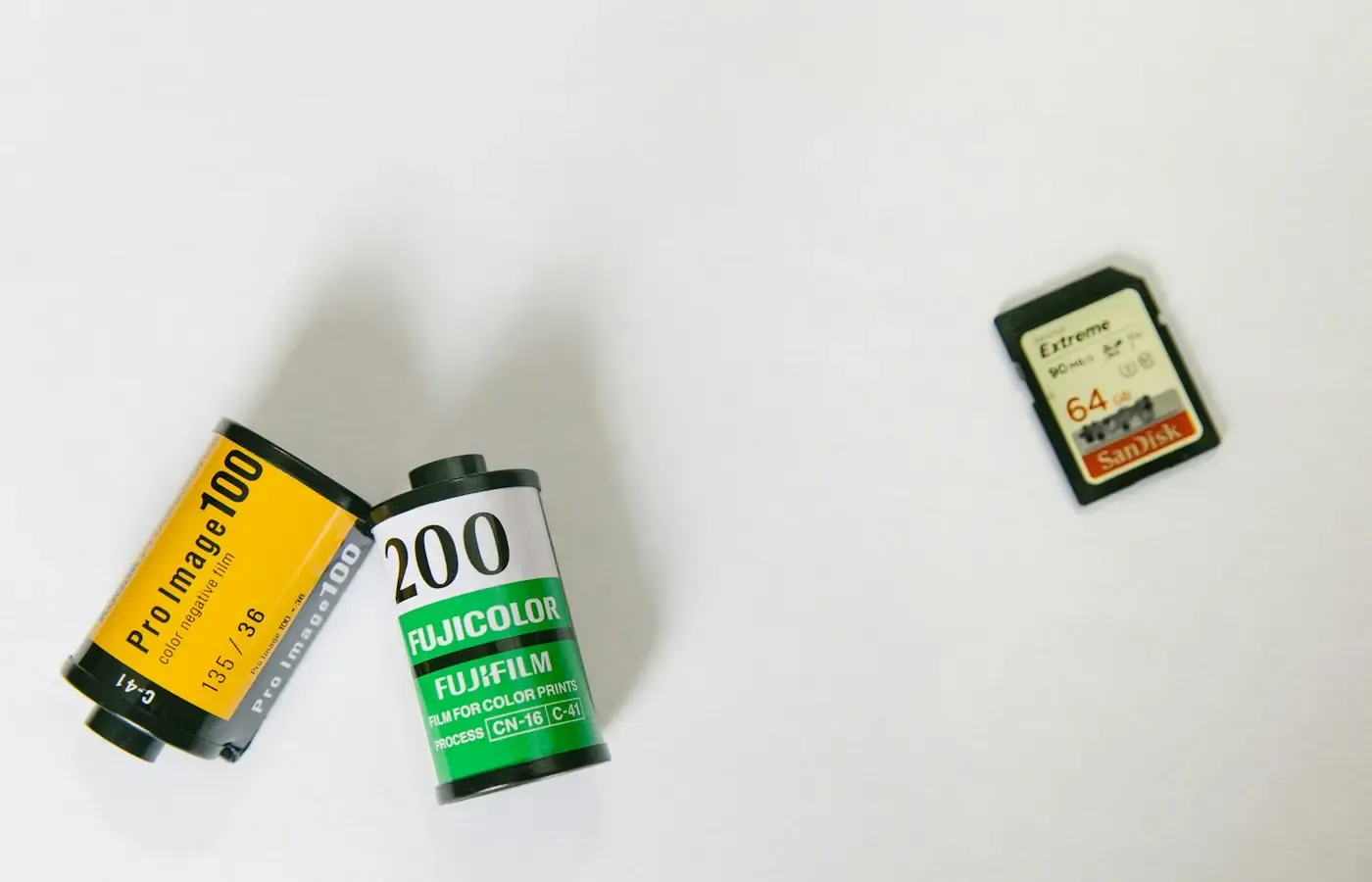
A photograph can be easy to take and surprisingly hard to keep.
The immediate question—RAW or JPEG?—is often framed as a test of photographic seriousness. It is more usefully understood as a decision about what you may want from an image later: quick sharing, modest correction, a careful re-edit, a large print, or simply the confidence that a family photograph will still be viewable after today’s editing software has changed.
RAW and JPEG serve different points in a photographic workflow. RAW generally preserves more of the camera’s capture data for later interpretation. JPEG is a compact, widely used finished-image format designed for convenient storage, delivery and viewing. Neither format, on its own, solves the larger archival problem: keeping originals, edits and metadata understandable without being tied indefinitely to one camera maker or one subscription app.
There is no permanently future-proof file. There are, however, ways to make your collection less dependent on a single tool—and less burdensome to manage.
The format choice is really an editing-and-archive choice
A JPEG is not merely a smaller RAW file. It is an image that the camera has already processed into a finished-looking result: it applies choices about colour, contrast, sharpening, noise reduction and white balance, then uses lossy compression to reduce file size. As Adobe’s overview of JPEG and RAW explains, JPEG is a lossy raster format and among the most widely used image formats.
That processing is often useful. If you like the look your camera produces and want photographs that can be sent, printed, uploaded or opened on almost any device with little fuss, JPEG may be exactly the right output. The smaller files also make the practical chores of copying, sorting and storing a library easier.
RAW works differently. It is a family of camera-capture formats rather than one uniform file type. A RAW file retains sensor-derived image data and records camera settings as processing instructions rather than baking every choice into the visible image. Canon describes white balance, Picture Style and related settings as information that can be changed later in compatible RAW-processing software. That is why RAW can be useful when an image needs a more considered interpretation after the moment of capture.
The essential question is therefore not, “Which format is better?” It is: which decisions do you want to postpone?
If you are documenting a holiday, a child’s birthday or a work event and expect to make only light edits, JPEG’s convenience may be worth more than extra adjustment latitude. If you are photographing a difficult scene, working in mixed light, or making images you expect to revisit carefully, RAW gives you more room to work.
What RAW keeps available—and what it asks of you
The attraction of RAW is not a promise that every photograph will become better. It is the option to revisit how the photograph is rendered.
A RAW workflow can be particularly helpful where the camera’s automatic decisions are likely to be imperfect: a bright window behind a person, artificial light mixed with daylight, a night scene, or a photograph whose intended mood only becomes clear later. Because the original capture is retained, you can make a new interpretation without repeatedly degrading the same finished JPEG.
Canon compares the role of a RAW file to a digital negative: processing it creates a separate output file while the original capture remains unchanged. That distinction matters for ownership. You can create a black-and-white version, a print-oriented version and a smaller sharing copy without treating any one export as the sole version of the photograph.
But RAW imposes obligations that JPEG largely avoids.
You need software that recognises your camera’s format. You need time to process photographs before they are easily shared. And you need a way to preserve the work done in the editor: crop choices, local adjustments, ratings, captions and keywords may sit in a catalogue database, a sidecar file, or application-specific settings rather than inside the RAW image itself.
RAW also does not mean the same thing across every camera. Manufacturers use different formats and compression methods, so it is unhelpful to make universal claims about RAW file size or whether every RAW file is uncompressed. The consumer consequence is simpler: RAW files commonly require more storage and more management than JPEGs, and the amount depends on the camera and its settings.
For important, substantially edited images, the UPDIG file-format guidance identifies an intermediate RGB master file—such as TIFF or PSD—between original capture and final delivery. Such files can preserve an edited version without reducing it to a small, heavily compressed web export. They are not necessary for every snapshot; they are useful when an edit itself has lasting value.
RAW is a working format, not a finished deliverable
A RAW file is not the most convenient answer when a recipient needs an image now. Many messaging services, social networks, photo labs and ordinary devices expect JPEG or another common rendered format. Even where RAW can be opened, the viewer may not reproduce the image as your editing software did.
This is why an archive made only of RAW files can be oddly incomplete. It may contain your richest source material while making the photographs harder to browse and share. A good workflow separates the original from the usable copy rather than assuming one file must do every job.
Why JPEG remains sensible for many photographs
JPEG earns its reputation because it removes friction. It is compact, broadly supported and immediately legible to people who do not share your software setup. For everyday pictures, that can be more valuable than retaining maximum flexibility.
JPEG is especially sensible when:
- the camera’s processing already produces results you like;
- the image is mainly for messaging, web sharing or routine prints;
- storage and transfer space are limited;
- you do not expect detailed editing later; or
- photography needs to remain a light, enjoyable habit rather than a post-production task.
The lossiness of JPEG compression is real, but it should not be turned into an automatic warning against using it. UPDIG recommends JPEG for web delivery and notes that high-quality JPEGs can be visually indistinguishable from TIFF in some print contexts. That is qualified practical guidance, not a guarantee for every file, print size or editing history.
What matters is avoiding unnecessary cycles of editing and re-saving a JPEG as JPEG. Each additional lossy save can discard more information. If you want to make a significant edit to a JPEG, save the work as a new file and retain the camera original. The result may still be entirely satisfactory; you are simply preserving an escape route.
The broader mechanism is straightforward. Uncompressed image data is large because it stores many values directly. Lossless compression reduces size while allowing exact recovery; lossy compression achieves greater reduction by discarding some information. The MIT Computational Photography material on formats and compression is useful background here: the storage trade-off is not magic, but a balance between size and what must be retained.
Compatibility is not just about opening a file once
A photograph is not truly accessible merely because it opens today.
Camera RAW formats are often specific to a manufacturer and sometimes to a camera generation. Software support can be excellent for years, but long-term access still depends on operating systems, applications, licensing, hardware and the continued ability of a program to interpret the file as intended. Cambridge in Colour’s discussion of archival backup makes the central uncertainty plain: no one can reliably guarantee that proprietary RAW formats will retain full support, or that they will render identically, decades from now.
That uncertainty is not a reason to abandon RAW. It is a reason not to rely on RAW alone.
Adobe promotes Digital Negative (DNG) as a royalty-free RAW format intended for compatibility, and offers it as an alternative conversion path in its DNG-versus-RAW overview. Since Adobe developed DNG, readers should treat that compatibility case as the company’s description of its format—not independent proof that conversion makes an archive permanent or universally safer.
Converting camera RAW files to DNG can reduce the number of proprietary formats in a collection, but it is a migration project with risks and costs. You must confirm that the converted file opens correctly, that relevant metadata has survived, and that you have decided whether to retain the original manufacturer RAW file. For most people, keeping the original captures and creating accessible derivatives is a more cautious first step than undertaking a wholesale conversion.
The useful principle is redundancy of access, not faith in a single extension.
A low-lock-in workflow for everyday photographers
A durable workflow does not need to be elaborate. It needs to distinguish originals, meaningful edits and everyday copies.
1. Keep the files that came from the camera
Retain original JPEGs or RAW files after importing them. If you shoot RAW, do not treat a social-media export as the only surviving version. If you shoot JPEG, preserve the original camera file before making a heavily altered version.
For photographs that matter, keep the originals in a folder structure you can understand without proprietary software. Dates, events and clear names are more useful over time than a folder system that only makes sense inside one catalogue.
2. Export ordinary, accessible copies
Create JPEGs for sharing, casual viewing and routine delivery. They are the files most likely to remain easy to open on another computer, phone or television without installing specialist software.
For photographs with substantial layered edits or work intended for high-quality reproduction, consider retaining a TIFF or PSD master in addition to the original and the JPEG delivery copy. UPDIG’s distinction between capture files, RGB master files and delivery files is a useful model: different versions can have different jobs.
3. Preserve the instructions behind important edits
Many editors store adjustments separately from the image: in sidecar files, catalogues or cloud libraries. If an edit would be hard to reproduce, find out where your software stores that information and include it in your backup.
This is also a reason to export finished versions of important work. A TIFF or high-quality JPEG will not preserve every editable setting, but it preserves the visible result even if the catalogue becomes difficult to recover.
4. Keep more than one readable copy
Copies should not all depend on the same drive, account or physical location. The research here does not establish a universal backup rule, a reliable storage-medium lifespan or a fixed migration schedule. It does support the more modest conclusion that changing technology must be planned for rather than ignored.
Periodically open a small sample of older files, including RAW originals, sidecars and finished exports. Confirm not only that they exist, but that you can read them and understand what they are. That check is more informative than assuming a backup is healthy because it completed without an error message.
5. Avoid a conversion project without a reason
Do not convert an entire library simply because DNG, TIFF or any other format is said to be archival. A large migration can introduce mistakes, consume time and create confusion about which file is authoritative.
Convert selectively if it solves a demonstrated compatibility problem, supports a chosen workflow, or makes a collection easier to manage. Keep sample checks, retain metadata, and avoid deleting originals until you have verified the results.
Choose by the photographs you may want to revisit
The right answer can change within the same camera and the same day.
| If your priority is | A reasonable starting choice | What to preserve |
|---|---|---|
| Fast sharing and minimal editing | JPEG | Original JPEGs and any important edited versions |
| Flexibility for exposure, colour and rendering decisions | RAW | RAW originals, editing metadata and JPEG exports |
| Immediate sharing plus later editing latitude | RAW plus JPEG, if your camera supports it and storage is manageable | Both files, with a clear import routine |
| Important edited images | RAW or JPEG original plus a TIFF or PSD master where useful | Original, master edit and usable JPEG export |
| An existing workflow that already works | Keep current | Check that originals, exports and metadata can be opened independently |
RAW is not better than JPEG for every photograph. It is better suited to photographs where deferred editing choices matter. JPEG is not an inferior consolation prize; it is a practical finished format that remains valuable precisely because it is easy to use.
For most photographers, the best long-term approach is not choosing one format forever. It is keeping the original capture, making ordinary formats available for ordinary use, preserving valuable edits, and maintaining more than one copy that can still be opened.
That is less glamorous than a format verdict. It is also more likely to leave you with photographs you can actually enjoy years from now.
Sources & methodology
This guide is based on supplied documentation and educational resources rather than first-hand camera or software testing. Camera makers and software companies are cited for descriptions of their own formats and workflows; no source establishes that any format is permanently future-proof.