A fast itinerary can look magnificent in a planning app: six cities, four hotels, three flights, two sunrise shoots and a folder full of saved restaurants. In practice, much of the trip is spent checking out, transferring, waiting, navigating and reconstructing a routine in a new room.
Slow travel is often marketed as an environmental virtue. Its stronger consumer case is simpler: fewer transitions can buy more usable time.
Count transitions, not destinations
Every move has a fixed cost.
Packing, checking out, reaching a station or airport, security, boarding, transport on arrival, checking in and learning the new neighborhood can consume half a day even when the scheduled journey is short.
When comparing itineraries, calculate door-to-door transition time, not only flight or train time.
A three-night stay may contain two real days. A seven-night stay often contains six.
Fewer stops can reduce transport emissions, but they also improve the value of accommodation, local transit passes, grocery purchases and the mental map you build of a place.
Choose transport by the trip you are actually taking
Tourism has a substantial climate footprint, and Reuters reported in 2025 that aviation accounts for more than half of tourism-related greenhouse-gas emissions. For routes where good rail exists, trains can turn travel time into usable time and avoid airport transfers.
But “always take the train” is not serious advice globally. Distances, accessibility, price, schedules and geography vary.
Use a hierarchy:
- Can the trip be enjoyable with fewer long-distance movements?
- Is rail or coach practical for a segment?
- If flying is necessary, can you reduce connections?
- Can you stay longer so the long-haul journey supports more days on the ground?
The biggest decision is often not which carbon calculator to use. It is how many times you move.
Stay where everyday life is possible
Accommodation changes the shape of a trip.
A room with a refrigerator, laundry access or a small kitchen can make a longer stay easier and reduce the feeling that every meal must be an event. Being near public transit, a market and ordinary neighborhood services can matter more than being beside the single most photographed landmark.
Before booking, map:
- transit stops;
- grocery stores;
- late-arrival food options;
- pharmacy;
- laundry;
- safe walking routes;
- the first two activities you expect to do.
A slightly less central room with excellent transit can be a better value than an expensive address that forces you into taxis for everything else.
Scrutinize “eco” hotels like any other green claim
Sustainability labels are uneven.
UNEP recommends looking at concrete practices: water and waste management, energy use, local sourcing, local employment and other operational details. That is more useful than a leaf icon.
Ask:
- Is renewable energy actually used?
- Are towels and linens changed by default or on request?
- Is single-use packaging reduced?
- Is food waste measured?
- Are refill stations available?
- Are staff and suppliers local where practical?
- Is there a credible third-party certification with published criteria?
- Does the property provide transit or walking information rather than defaulting to private cars?
A luxury resort can still have a large resource footprint. A simple hotel is not automatically sustainable. Look for evidence.
Spend locally—but define “local” carefully
“Support local” is sound advice that becomes vague quickly.
A global booking platform may deliver you to a locally owned guesthouse. A locally branded souvenir shop may sell mass-produced imports. A restaurant chain can employ local workers while sending profits elsewhere.
You do not need to audit every dollar. Make a few deliberate choices:
- eat at independent restaurants as well as famous institutions;
- hire licensed local guides;
- buy work from identifiable local makers when you want a souvenir;
- use public markets respectfully;
- learn normal tipping and bargaining practices;
- avoid treating poverty or ordinary residential life as scenery.
Money is part of the relationship between visitor and place.
Overtourism is partly a timing problem
A destination can be overwhelmed at 10 a.m. and calm at 5 p.m. It can be saturated for eight weeks and economically dependent on visitors during the shoulder season.
If your schedule allows, shift time before shifting destination.
Visit major sites early, late or on less busy days. Stay overnight in places where day-trippers leave. Travel outside peak periods when weather and local conditions remain suitable.
Do not chase “hidden gems” simply to reproduce the same crowd somewhere less prepared for it. Sometimes the more responsible choice is a well-managed popular place at a quieter time.
Photography: stop treating every place as public domain
Travel photography has its own consumer ethic.
A long lens can make a photograph technically easy while making consent socially ambiguous. Children, worship, grief, poverty, medical situations and private homes deserve more caution than street architecture.
Ask before making close portraits when practical. Learn restrictions in religious and cultural sites. Do not block sidewalks, doorways or working spaces for a composition.
And separate “legal to photograph” from “decent to photograph.”
The camera should increase attention, not reduce people to content.
Build a smaller visual brief
Instead of attempting to photograph everything, give the trip a visual question.
It might be:
- how a city uses shade;
- morning deliveries;
- public seating;
- signs and typography;
- one river at different times;
- domestic architecture;
- the transition from tourist center to residential streets.
A narrow brief produces a more coherent image set and gives you a reason to revisit places.
Repeated observation is one of slow travel’s photographic advantages.
Carry less camera
Gear has a transport cost and an attention cost.
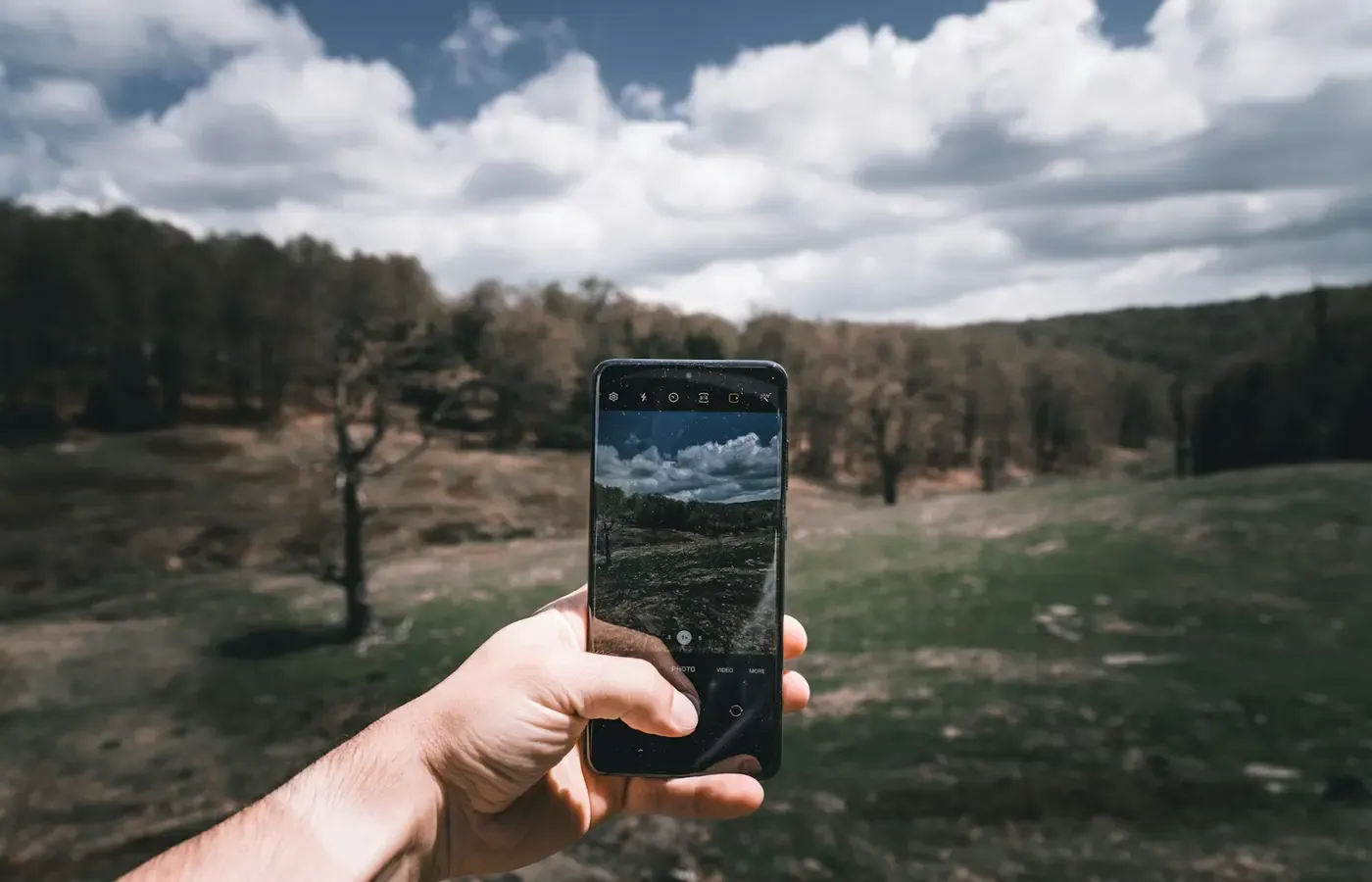
For many trips, one body and one or two lenses are enough. A phone may be enough. The correct kit depends on the pictures you are actually trying to make.
Every additional lens increases weight, insurance risk, battery management and the temptation to solve boredom by changing equipment instead of looking harder.
If an item has no specific assignment, leave it.
Carbon offsets come after reduction
Offsets are often offered at checkout as a clean moral transaction. Their quality varies, and they should not distract from the direct decisions available to a traveler.
First reduce avoidable movement, choose lower-emission transport where practical, stay longer and select efficient accommodation. If you then purchase offsets or climate contributions, investigate methodology, additionality, permanence and verification.
The order matters: reduction first, compensation second.
The seven-day redesign
Take a hypothetical seven-day trip with three cities.
Now remove one city.
Use the recovered transfer day for:
- a neighborhood walk with no attraction booked;
- a day trip by rail;
- a second visit to a museum or market;
- a long lunch;
- a photo walk at a different time of day;
- a rest period.
The itinerary may look less impressive in a list. It often feels richer while living it.
A booking checklist
Before committing:
Transport
- door-to-door time;
- number of connections;
- luggage constraints;
- transit from arrival point;
- refund/change rules.
Accommodation
- walkability and transit;
- noise;
- laundry and food options;
- sustainability practices;
- taxes and resort fees;
- cancellation terms.
Local impact
- peak-season pressure;
- reservation systems;
- local guides and businesses;
- cultural rules;
- water or environmental constraints.
Photography
- equipment insurance;
- local drone rules;
- consent norms;
- backup strategy;
- whether the camera kit will dominate the day.
The bottom line
Slow travel is not a command to spend three months in every place. It is a design principle: minimize transitions that do not add value, and spend the saved time becoming less disoriented.
That can reduce emissions. It can also improve the trip in the consumer sense—fewer booking fees, fewer airport meals, fewer rushed hotel stays, less equipment, more useful local knowledge and better photographs.
The goal is not to move slowly for its own sake. It is to stop paying—in money, carbon and attention—for movement that does not make the journey better.
Sources & methodology
Reporting and fact-checking for this rewrite were updated in August 2026. The original publication date is retained in frontmatter to preserve the site’s existing editorial chronology.
- How travel is getting smart, and more sustainable, with AI — Reuters.
- Travellers need to start making sustainable choices — United Nations Environment Programme.
- Tourism’s carbon emissions measured in landmark report — UN Tourism.
- How to travel better: a guide to more sustainable travel — National Geographic.
- What sustainable tourism means — National Geographic.