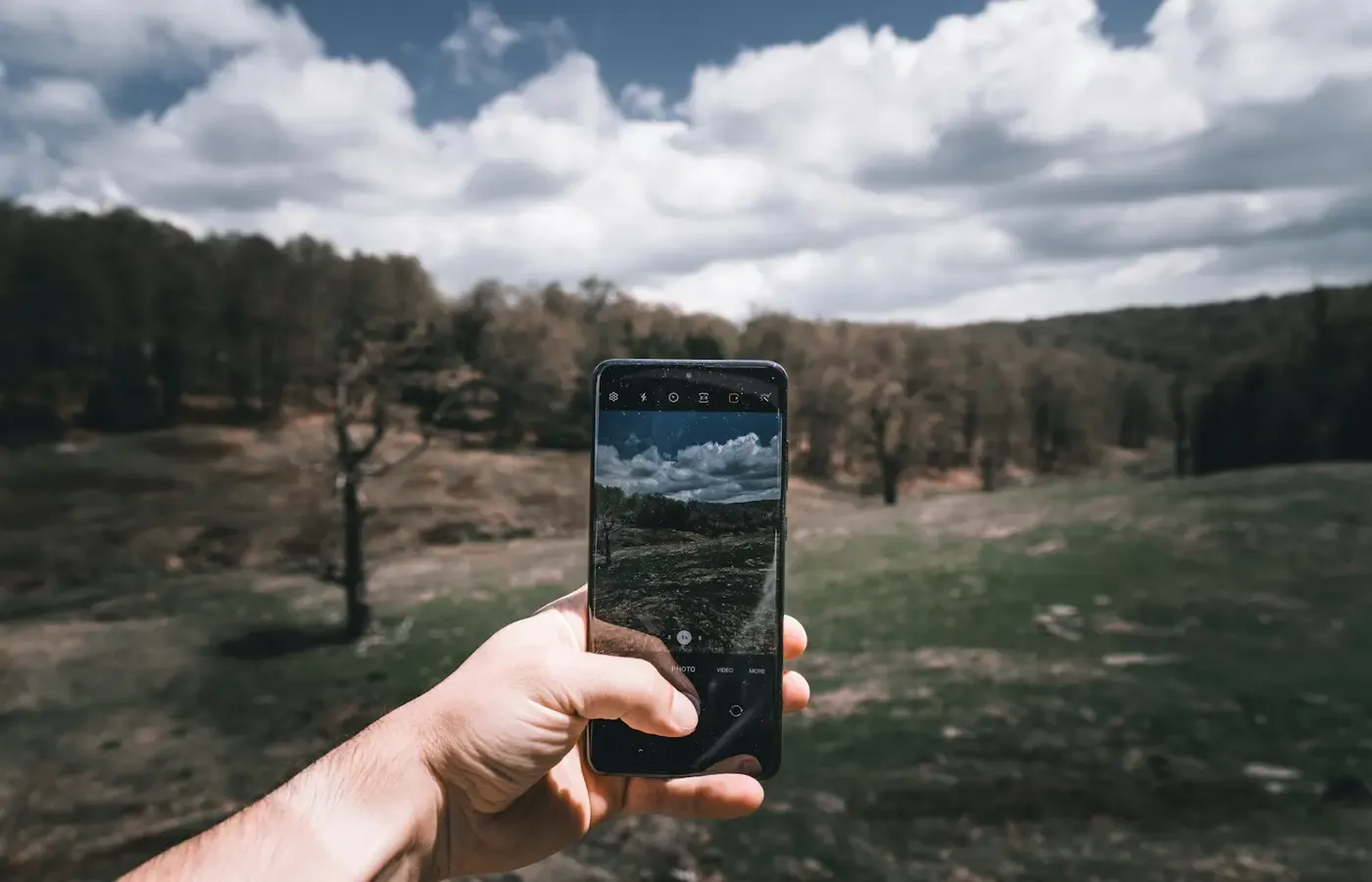
The useful question in a phone camera vs camera comparison is not which category is “better”. It is whether a separate camera would reliably solve a photographic problem that your phone keeps making difficult.
That distinction matters because a phone is already a remarkably capable camera in the place where most pictures happen: in a pocket, ready when a child does something unexpected, a meal arrives, light changes on a walk, or friends gather. A dedicated camera can offer more control and, with the right lens, make some subjects substantially easier to photograph. But it also asks you to carry another device, charge it, learn it, move its files and keep it available when the moment arrives.
This is a category-level guide, not a verdict on a particular handset or camera. Results vary with the specific phone, camera body, lens, software, technique, conditions and intended output. The available evidence does not support blanket claims about autofocus, zoom, stabilisation, weather resistance, battery life or long-term reliability. The decision is best made from the pictures you actually want to make repeatedly.
Start with the photos your phone routinely misses
Before looking at specifications, inspect your recent camera roll. Not the best images: the near-misses and the jobs you avoided attempting.
Perhaps your phone is excellent for family snapshots in daylight, but disappointing when your child is performing indoors. Perhaps you regularly photograph birds, distant sports or small objects for a craft business. Perhaps you want files that will stand up to deliberate editing or larger prints. Or perhaps your phone already produces the photographs you enjoy sharing, and the supposed shortcomings are mostly the feeling that “real photographers” own cameras.
A separate camera earns its place when it fixes a recurring frustration, rather than an occasional one. E/CONSUMER’s earlier guide to the same category decision puts the ownership test plainly: the gain must justify carrying another device, learning its controls, managing its files and maintaining the equipment around it.
Try writing down three things:
- The subject: people indoors, fast-moving pets, distant wildlife, products, landscapes, close-up details or something else.
- The condition: dim rooms, strong backlight, a need to stay far away, a need to work close to the subject, or limited time to compose.
- The outcome: a message attachment, social post, photo book, print, client delivery or a file you intend to edit carefully.
If the same problem appears often enough, a camera may be a practical tool. If it happens twice a year, a more capable phone, a borrowed camera or simply accepting the occasional limitation may be the saner answer.
Where a phone is often the better camera
The phone’s central advantage is not merely convenience in the abstract. It is availability. A camera left at home has no image quality at all.
In a TechRadar comparison of a Samsung Galaxy S23 Ultra with a mirrorless workflow, the writer found the phone was consistently at hand, produced satisfying images quickly and enabled immediate sharing. That is an account of one person’s use of one phone, not a controlled test or a universal performance finding. Still, it captures a consumer reality: the shortest path from seeing something to sharing a competent photograph is often the phone already in your hand.
For everyday photographs, that short path has real value. Phones combine capture, basic editing, messaging and publishing in one device. They are discreet at dinners and gatherings, less conspicuous on a walk, and easy to hand to another person for a group photograph. Their processing is designed to produce a share-ready result without requiring you to make many technical choices.
Digital Camera World has argued that a high rate of usable pictures can matter more than maximum detail when images are principally viewed on a phone. That is editorial opinion, but it describes a useful criterion. If the final destination is a group chat, a small screen or a casual photo book, the difference between a quick good image and a theoretically better image that was never taken can be decisive.
A phone is often the right tool when:
- You photograph ordinary life more than planned shoots.
- Immediate sharing matters as much as the image itself.
- You do not want a separate bag, battery routine or import process.
- Your pictures are mainly viewed on screens at modest sizes.
- You prefer a simple, automatic workflow to learning camera settings.
None of that means a phone delivers maximum capture flexibility. It means that flexibility is only valuable if you will use it.
The recurring jobs that can justify a dedicated camera
Dedicated cameras are not one thing. A compact camera, an interchangeable-lens mirrorless body and a DSLR impose very different costs and offer different capabilities. The meaningful question is whether a body and lens combination addresses your specific task.
Low light, controlled blur and close work
WIRED’s comparison of phone and DSLR photography identifies three areas where purpose-built cameras can retain an advantage: low-light image quality, more convincing optical background blur and extreme close-up photography. Its explanation is practical: larger sensors and access to different lenses give a camera system more physical options than a thin phone body can usually accommodate.
That does not mean every camera will beat every modern phone in every dim room. A modest camera with an unsuitable lens may not solve the problem you have. Nor does it establish a fixed margin of quality. But if indoor events, evening scenes, portrait backgrounds or close detail are recurring photographic jobs, a camera system gives you the option to choose equipment designed around them.
Distance and field of view
Interchangeable lenses also change where you can stand. A wide lens can include more of a room or landscape; a longer lens can bring a distant subject closer in the frame without asking you to walk nearer. A macro-oriented lens can permit close work at an appropriate working distance.
This is often more consequential than broad claims about “better images”. A parent photographing sport from the touchline, a traveller who cannot approach wildlife, or a maker documenting fine details may need a particular viewpoint rather than a generally more elaborate camera.
Deliberate shooting
A dedicated camera can also change how you work. Physical controls, a larger grip and a viewfinder may make it easier for some people to compose deliberately. That is a preference, not a measurable advantage shared by every photographer. It is worth testing with a borrowed or rented camera before treating it as a reason to buy into a system.
Be especially careful with feature lists. Claims about autofocus tracking, burst speed, zoom reach, stabilisation, weather sealing and video performance require evidence for the exact phone, camera body, lens and software version under consideration. A category comparison cannot settle them.
A camera body is not the whole purchase
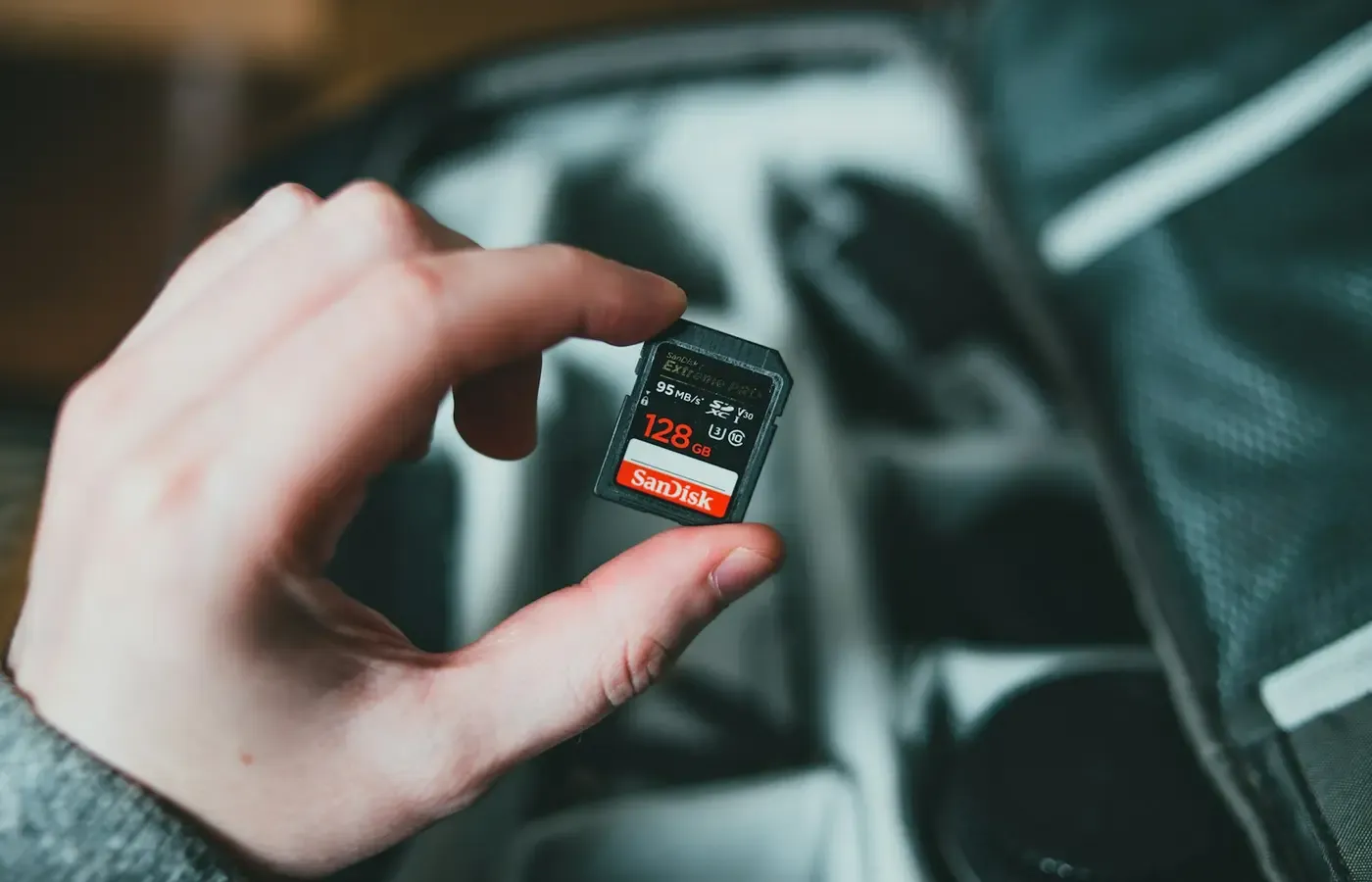
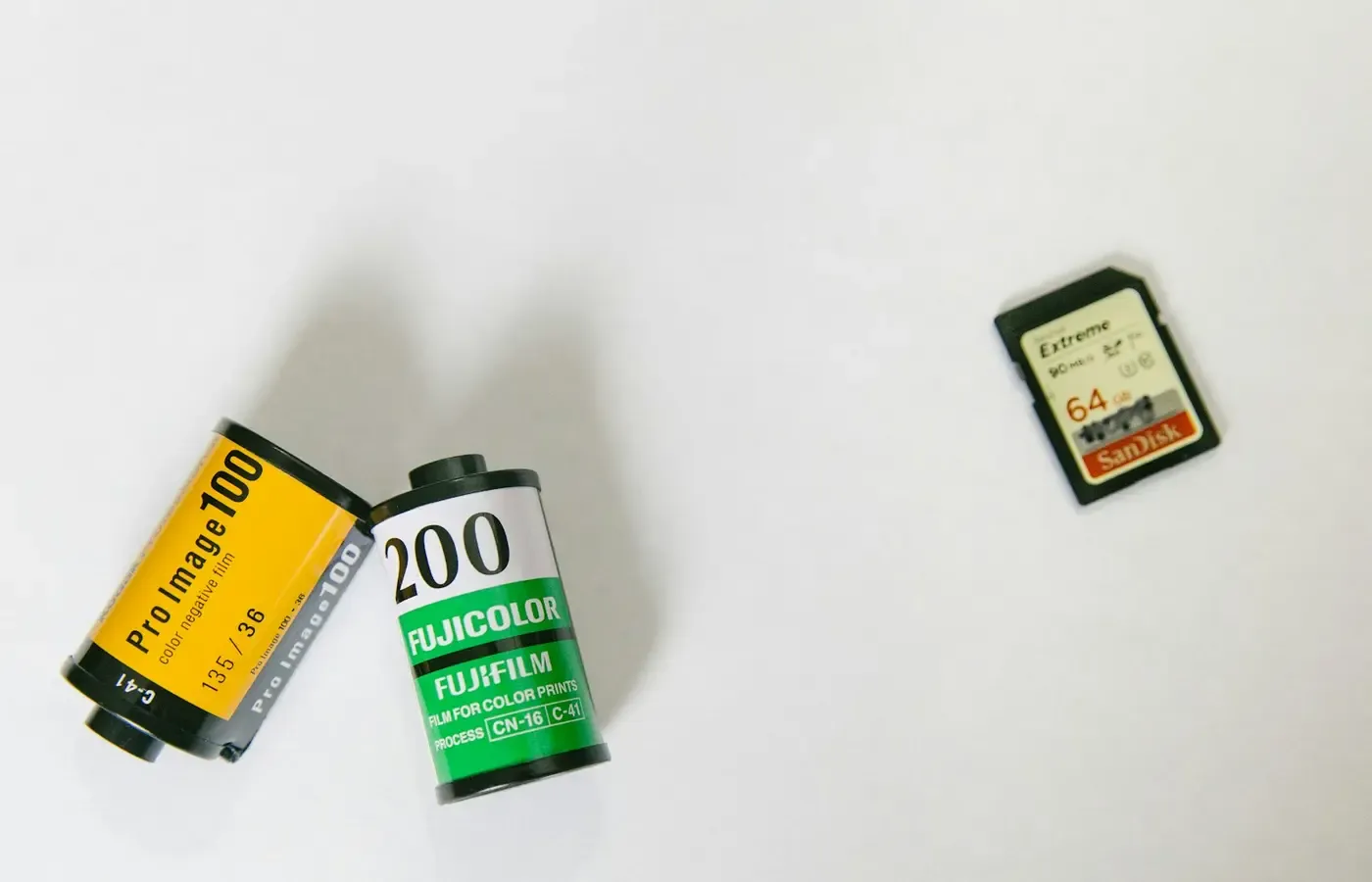
The purchase is not just a camera body. It is a small system: at least one lens, memory cards, batteries and charging arrangements, and often a bag or protective case. Depending on your ambitions, it may also become a tripod, flash, filters and a more capable computer or storage routine.
The burden need not be excessive. Some people happily carry a small camera every day and enjoy the ritual. But it should be counted honestly rather than waved away as a minor inconvenience.
The TechRadar writer described the social awkwardness, weight and expense of taking a full-frame camera with a large telephoto lens to a wedding. That particular example should not be extended to all cameras: small bodies and compact lenses exist. Its useful lesson is narrower. The camera that solves your hardest photographic job may be precisely the one least likely to be with you for ordinary life.
Fstoppers’ iPhone-versus-DSLR piece similarly describes the preparation involved in its DSLR workflow: packing equipment, charging batteries and formatting cards. It is an illustrative, experience-led comparison rather than evidence of typical ownership. Yet those tasks are familiar enough to deserve a place in the decision.
Before buying, ask whether you will realistically:
- carry the camera on the days when the desired photos happen;
- charge and carry a spare battery when needed;
- keep cards available and transfer files after shooting;
- practise enough to use the additional controls under time pressure; and
- accept that lenses can make a compact purchase less compact over time.
If the answer is no, the phone may remain your best camera even if a dedicated system has greater potential.
Files, editing and storage: choose the workflow you will sustain
A camera can offer more room to make decisions after capture. Fstoppers describes DSLR RAW files as large, detailed files with substantial latitude for post-processing, while characterising phone output as more immediately suited to rapid social sharing. That distinction is useful, but it should not be oversold. Phone images can be edited, and dedicated cameras can produce ready-to-share JPEGs. The difference is usually one of workflow and control, not a hard border between casual and serious photography.
The question is whether you want the work after the shutter press.
With a phone, you can crop, adjust, send and archive an image within minutes. With a camera, you may need to import files, select from a sequence, back up the originals, edit them and export versions for sharing. Some readers will find that process satisfying; others will let cards accumulate in a drawer.
There is no supplied evidence here for comparing cloud costs, privacy practices, editing subscriptions, proprietary formats or export restrictions across brands. Those issues become important once you shortlist a specific system. At that point, consult the relevant manufacturer documentation and software privacy terms rather than assuming that every camera app or cloud service behaves alike.
A useful rule is to choose the workflow you will repeat after a busy week, not the one you imagine enjoying on the first weekend with new gear.
Three sensible outcomes
Keep using the phone
Keep the phone as your primary camera if it captures the moments you value, its output suits your usual destination, and your frustrations are occasional rather than recurring. You may still improve results through better timing, steadier holding, a cleaner lens and more deliberate framing—without acquiring another device.
This is not settling. It is choosing low friction, immediate access and a workflow that matches your life.
Add a dedicated camera for a defined job
Add a camera when you can state the job clearly: indoor performances, wildlife at a distance, close product work, portraits with deliberate control, or edited prints. Start from that job and choose the lens and body together. A body chosen for a specification sheet without the needed lens may not solve the actual problem.
Avoid treating a camera as a promise of better photographs in general. It is a tool that may make certain photographs easier, provided you bring it and learn to use it.
Consider used equipment, cautiously
Used equipment can be a sensible access route if it lets you try a camera system without paying for the newest model. It can also make more room in the budget for the lens that serves your actual subject.
But “used” is not automatically cheap, repairable or environmentally preferable. Those claims depend on the model, condition, local market, remaining support and available parts. The supplied research does not establish a general sustainability or lifetime-cost advantage.
For a specific used listing, investigate the exact body and lens: physical condition, lens glass and controls, battery availability, firmware support, return terms and local repair options. Where shutter count is relevant, treat it as one condition signal rather than a guarantee of remaining life. If the seller cannot provide enough information, walking away is an entirely valid outcome.
Questions worth answering before you spend
Can a phone camera replace a dedicated camera for everyday photography?
Often, yes. For spontaneous family, social and travel pictures that are shared quickly or mainly viewed on screens, the phone’s availability and direct workflow can outweigh the benefits of a separate camera. Whether it replaces a camera for you depends on the subjects and output you care about.
When does a dedicated camera make more sense than a phone?
A dedicated camera makes more sense when a recurring task needs something your phone routinely cannot provide conveniently: a suitable lens for distance or close work, greater control in low light, deliberate background blur, or files you genuinely intend to edit and print.
Is a used camera a sensible alternative to buying a new one?
It can be, particularly as a lower-commitment way to enter a system or obtain a lens suited to your work. Check condition, support, batteries, returns and repair prospects for the specific model. Do not assume that age alone makes a camera a bargain.
Do I need interchangeable lenses to take better photos than my phone can?
No. Better photographs also depend on timing, light, framing and practice. Interchangeable lenses are valuable when different fields of view or working distances solve a repeated problem. If your photographs do not require those options, they may add cost and bulk without improving your results.
The bounded decision
A dedicated camera is worth considering when it removes a recurring barrier between you and the photographs you want: not when it merely represents a more serious version of photography.
Keep the phone when its readiness, processing and sharing workflow serve your real life. Add a camera when you can name the subject, condition and desired output that demand one. Consider used equipment when you can assess the particular item and retain a reasonable exit route. And if no persistent problem remains after that audit, the most useful upgrade may be no purchase at all.
Sources & methodology
This guide uses category-level, experience-led journalism and existing E/CONSUMER coverage rather than controlled tests of current models. Company specifications, prices, repair policies, support commitments and privacy terms were not supplied for a specific product, so this article makes no model-level claims about them.
- E/CONSUMER: Phone Camera or Dedicated Camera: When a Separate Camera Still Makes Sense
- TechRadar: Can the best flagship smartphone camera replace my beloved mirrorless DSLR?
- WIRED: Why you should ditch your phone camera for a ‘proper’ DSLR camera
- Digital Camera World: A phone is better than any dedicated camera for most people. Here’s why
- Fstoppers: iPhone Versus DSLR: The Ultimate Real-world Test