A refurbished phone can be an economical way to buy better cameras, materials or performance than the same money buys new. It can also be an old phone with polished glass, an uncertain battery and a reassuring adjective attached to the listing.
The difference is not appearance. It is whether the seller can account for the device: its exact identity, remaining software support, network status, battery condition, replaced parts and route back if something is wrong.
Those details are market-, model- and seller-specific. No seller policies, model support dates or carrier documentation were supplied for this guide, so it does not rank programs or prescribe a universal battery threshold. Instead, it gives you a framework for obtaining and testing the evidence that matters. Treat any missing answer as uncertainty you are being asked to buy.
“Refurbished” is a process, not a cosmetic grade
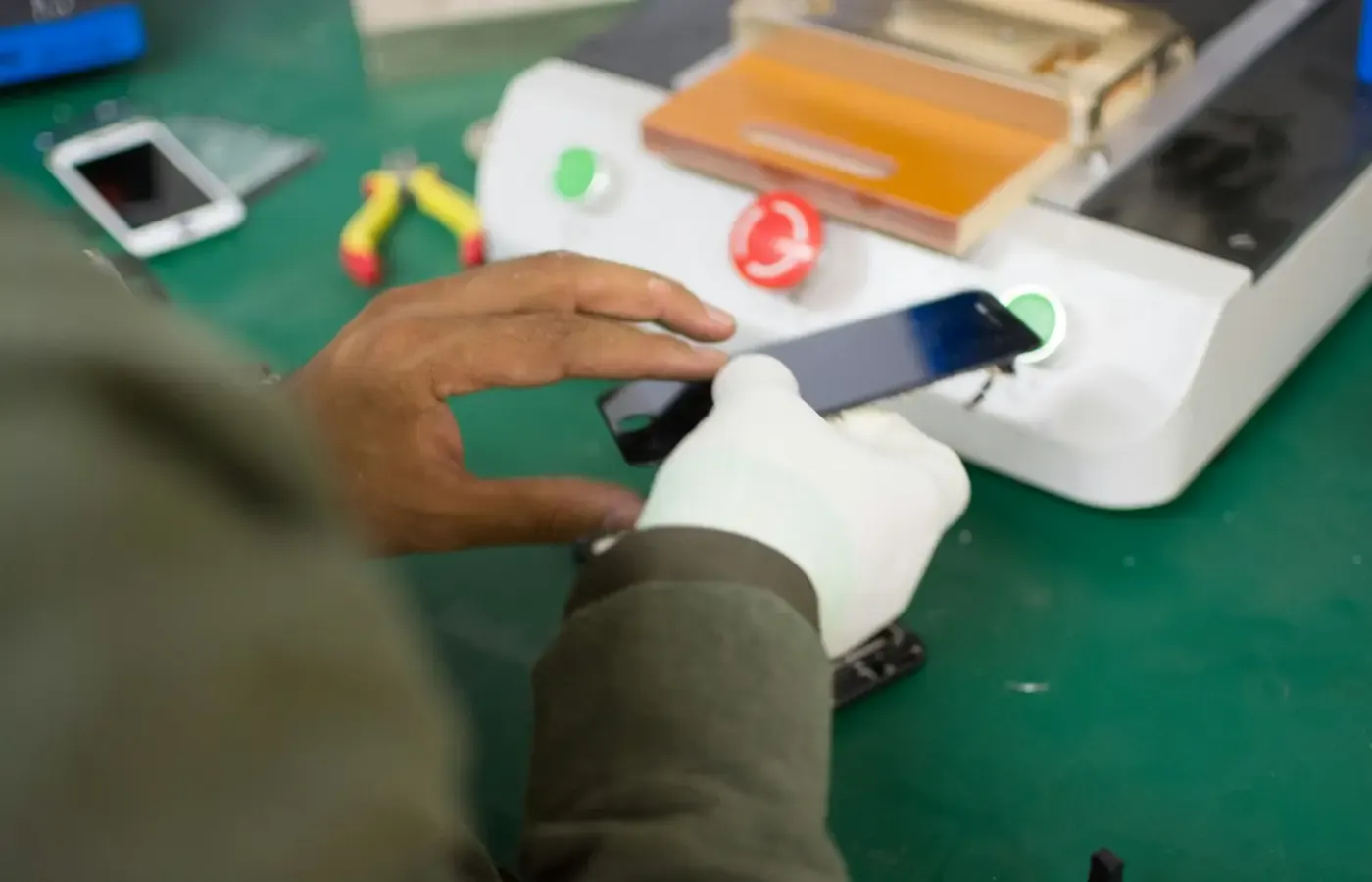
The word refurbished does not, by itself, tell you what happened to a phone. Depending on the seller and jurisdiction, it may describe a documented inspection and repair process, a returned product prepared for resale, or ordinary used stock sorted by appearance.
An open-box phone is another category again. It may have been returned with little use, but that does not establish its battery condition, activation status or absence of faults. Similarly, grades such as “excellent” and “like new” usually describe cosmetic condition under a seller’s own rules. They do not prove that the charging port, microphones or cellular radio were tested.
Before comparing prices, ask the seller to define the process behind the label:
- Who inspected or refurbished the phone: its manufacturer, the retailer, a named contractor or an unidentified supplier?
- Which functions were tested?
- Which defects lead to repair, replacement or rejection?
- Are the battery and display tested separately from basic power-on checks?
- Are replaced parts identified as new, used, original, aftermarket or unspecified?
- Is the warranty supplied by the seller, a third party or the manufacturer?
- Does the return policy apply to this individual listing and condition grade?
“Fully tested” is not a useful answer unless the seller explains what fully includes. A documented process cannot guarantee reliability, but it gives you something against which to judge a fault and request a remedy.
A plainly described used phone can therefore be a more intelligible purchase than a vaguely refurbished one. The label matters less than the records, policy and accountability behind it.
Start with the phone’s remaining useful life
A sound handset with little software support left may be poor value for someone intending to keep it for several years. Check support before becoming attached to the color, storage capacity or former flagship status.
You need the exact model number and regional variant, not merely the product-family name. Phones sold under one family can differ by market, carrier and network hardware. Then establish:
- The operating-system version currently installed.
- The date or level of its latest available security update.
- The manufacturer’s stated update commitment for that exact model and market.
- Whether the commitment is measured from launch, sale or another stated date.
- Whether essential apps and services you use still support the relevant operating-system version.
Use current manufacturer documentation for this work. Do not rely only on a seller’s phrase such as “still supported,” which may mean merely that the phone turns on, receives some updates or remains eligible for paid repair.
Support ending does not make a phone stop working at midnight. The practical problem is a shrinking ownership horizon: security fixes may cease, app requirements may move on, and faults can become harder to justify repairing. If you want three more years from the phone, compare that ambition with the documented runway rather than its age alone.
Verify connection and activation separately
A phone can be physically compatible with a network yet unavailable for activation. It can also be free of an account-linked activation lock but unsuitable for your carrier. These are separate checks.
Before paying, obtain the exact model identifier and confirm it against your intended carrier’s current bring-your-own-device information. Check the required SIM or eSIM arrangement and do not assume that every regional version supports the same network technologies.
Ask the seller to confirm, in writing where possible:
- whether the device is carrier-locked;
- whether it has been removed from the previous owner’s account;
- whether account-linked activation protection has been disabled correctly;
- whether its device identifier is eligible for activation on your carrier;
- whether it has been reported lost or stolen, where an official check is available;
- whether any seller guarantee covers a later activation refusal.
Follow the platform maker’s official transfer instructions. A factory reset alone should not be treated as proof that an account-linked lock has been removed. If setup requests the previous owner’s credentials, stop and contact the seller rather than attempting to bypass the protection.
Identifier checks also have limits. A clean result at one moment should not be interpreted as an unconditional promise of future eligibility. Ask what remedy applies if the phone is subsequently blocked or refused by the carrier, and keep the listing and seller’s answer.
Do not post a phone’s full device identifier publicly. Supply it only through the seller, manufacturer or carrier channels needed for the check.
Battery condition matters more than a polished frame
Cosmetic grades are easy to see and easy to market. Battery condition is less visible and more consequential.
There is no useful universal percentage that applies across every phone, operating-system version and replacement battery. A seller’s threshold may use a different method from the phone’s own estimate, while some devices expose more battery information than others.
Ask what the seller actually measures:
- Is battery condition inspected, estimated by software or tested through a discharge cycle?
- Is there a minimum condition for sale?
- Was this phone’s battery replaced, or merely judged acceptable?
- If replaced, who installed it and what kind of part was used?
- What remedy applies if the displayed condition or real runtime falls below the description?
- Is the battery covered for the full warranty period, a shorter period or not at all?
A replacement battery is not automatically better than an older original one. Its value depends on the part, installation, system compatibility and warranty. Equally, an original battery is not inherently reassuring if it is heavily worn.
After delivery, inspect any battery-health or service message available in the operating system, then observe charging and runtime during ordinary use. Sudden shutdowns, excessive heat, unstable charging or rapid decline deserve prompt attention. A short evaluation can reveal immediate trouble, but it cannot prove long-term capacity or durability.
Ask what was replaced—and what the repair changed
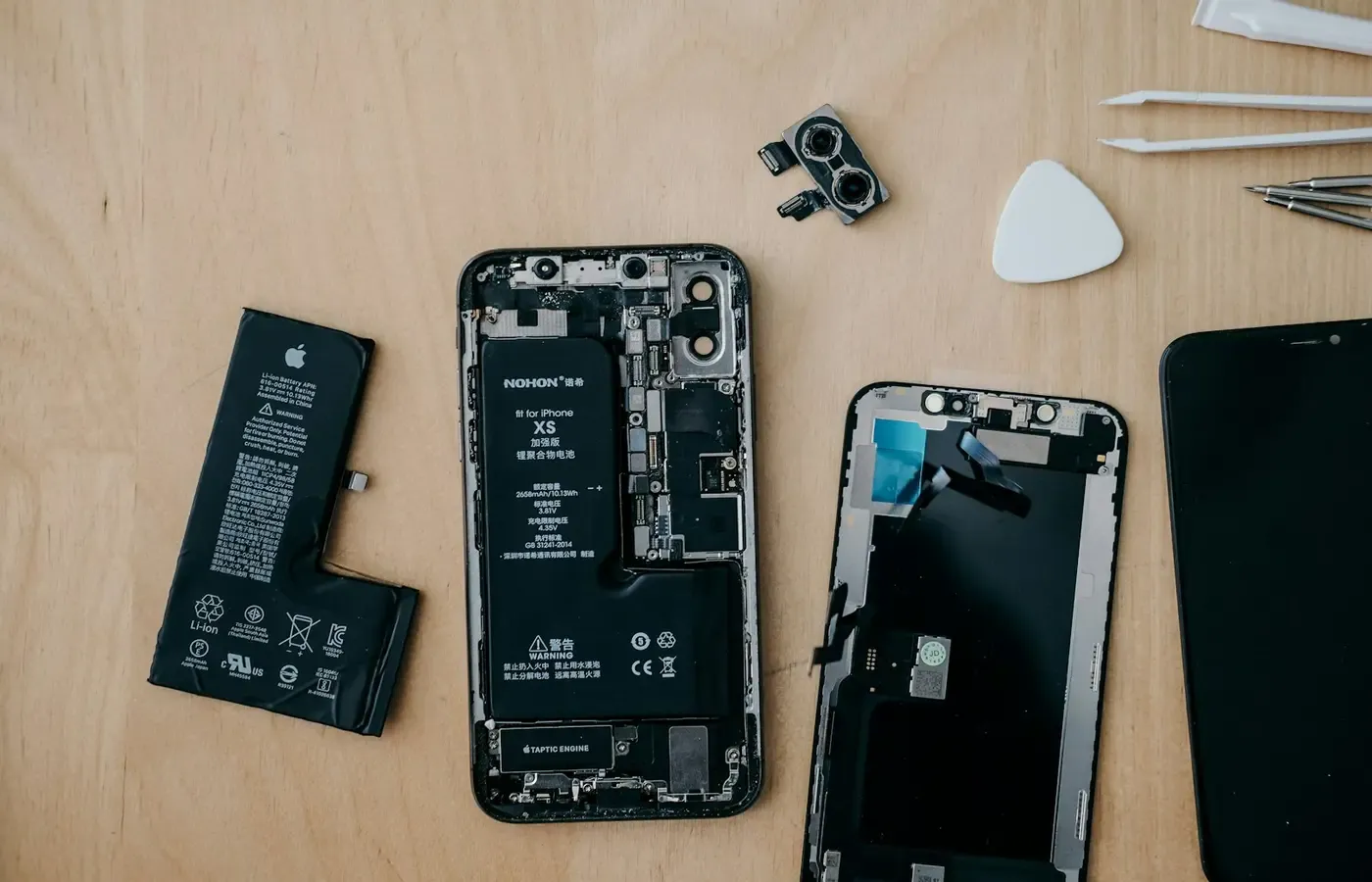
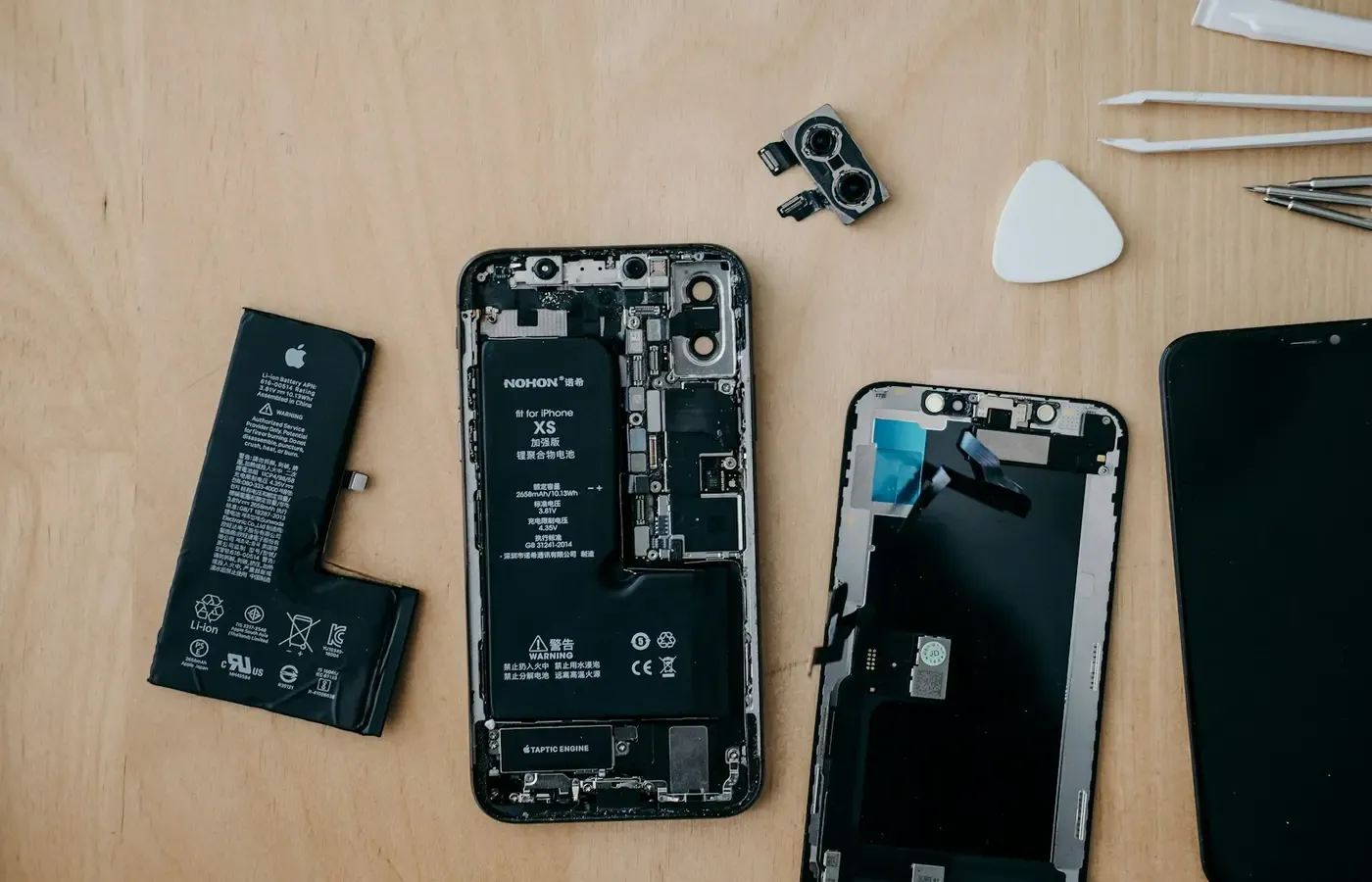
A repaired phone may be a perfectly sensible purchase. The risk lies in not knowing what was done or what functions were affected.
Ask specifically about the display, battery, cameras, biometric sensors, charging port, microphones, speakers, buttons, frame and rear enclosure. If parts were replaced, find out whether the seller supplies a repair record and whether system diagnostics produce warnings or limit functions.
Part origin alone does not establish quality. An original part can be worn or poorly installed; a non-original part cannot be dismissed without evidence. What matters is whether the finished repair preserves the features you need and is covered if it fails.
Display replacement, for example, should prompt checks of brightness, touch response, color behavior and biometric functions associated with the screen. Camera or enclosure work should prompt inspection of focus, stabilization and physical alignment. Any opened phone deserves caution around dust and water resistance. Do not assume that its original resistance rating still describes the repaired device unless the seller provides model- and repair-specific evidence.
Also consider future service. Ask whether the manufacturer or another repair provider will work on the phone in its present condition, and whether replacement parts create warnings, calibration requirements or warranty exclusions.
The warranty and return policy are part of the price
Two apparently identical phones are not equivalent if one comes with a clear return route and the other leaves every disagreement to the buyer.
Read the actual policy applying to the seller, market and listing—not a badge or marketplace slogan. Record the terms before ordering because policies can change.
Check:
- when the return clock starts;
- whether opening, setup or activation affects eligibility;
- who pays return shipping;
- whether restocking or inspection charges can apply;
- what packaging and accessories must be returned;
- how dead-on-arrival devices are handled;
- whether batteries, displays and cosmetic discrepancies are covered;
- how long the warranty lasts and who administers it;
- whether the provider chooses repair, replacement or refund;
- what condition or grade a replacement device may be;
- whether repaired or replacement phones receive a fresh warranty period;
- which faults and forms of damage are excluded.
Consumer rights and payment protections vary by jurisdiction. Consult current official guidance for your market rather than assuming that a voluntary seller warranty replaces, extends or limits statutory rights.
A cheaper listing may still be rational if you can absorb the risk and inconvenience. But compare the discount with return freight, possible battery service, time spent documenting a dispute and the chance of receiving another refurbished unit rather than a refund.
Use the return window as an acceptance test
Do not let the phone sit unopened while the easiest route out expires. Plan to inspect it promptly, without attempting repairs or modifications that could complicate a return.
Before setup
- Photograph the package, phone and included accessories.
- Preserve the listing, order confirmation and stated condition.
- Confirm the model, storage, color and identifiers against the order.
- Inspect the frame, glass, camera lenses and ports under good light.
- Check for swelling, separation, sharp edges or other physical damage. Stop using the phone and contact the seller if its physical condition appears unsafe.
During setup
Confirm that activation completes without the previous owner’s credentials and that your carrier accepts the device. Install officially available updates, then check the reported software and battery information.
Test the functions you are actually buying:
- touch response across the display, brightness and dead pixels;
- charging through the supplied or specified method;
- front and rear cameras at different focus distances;
- microphones, earpiece, loudspeakers and headphone connection if present;
- power and volume buttons, vibration and biometric unlocking;
- Wi-Fi, Bluetooth, cellular voice and data;
- physical SIM or eSIM operation as applicable;
- location services and screen rotation;
- every included cable or accessory.
Use repeatable tasks rather than impressions alone. Make a call, record and replay speech, photograph text and a distant subject, connect to a known Wi-Fi network, and charge while observing whether the connection remains stable. Keep notes and photographs of faults.
If something fails, contact the seller before arranging a repair. When returning the phone, follow the platform maker’s current instructions to remove your accounts and personal data without accidentally leaving activation protection enabled. Follow the seller’s packaging and authorization requirements, and retain shipping evidence.
This is an acceptance test, not a durability test. Passing it means the phone meets its description today; it does not establish how the battery or repair will age.
When a new budget phone is the safer purchase
An older refurbished flagship and a new budget phone distribute value differently. The better choice depends on the job and the uncertainty you are willing to manage.
| Priority | Refurbished premium phone may suit | New budget phone may suit |
|---|---|---|
| Hardware | You value a particular camera, display, material or feature | You need adequate basics rather than former flagship extras |
| Support | The exact model has enough documented runway for your ownership plan | A newer model offers a clearer or longer support horizon |
| Battery | Condition and remedy are documented | You prefer a new battery with simpler accountability |
| Repair | Parts and competent service are available | Straightforward warranty service matters more |
| Transaction risk | You can inspect quickly and tolerate a possible return | You want fewer unknowns and less seller-policy dependence |
Do not compare launch prestige. Compare exact configurations, current prices, support horizons, warranty coverage and likely ownership costs in the same market. If the refurbished phone may soon need a battery or has little software support left, include that in the decision rather than treating the lower purchase price as the whole cost.
There are also two quieter options. Repairing your current phone may preserve data, familiarity and accessories while avoiding another uncertain device. Postponing replacement is valid when the present phone still does its job safely and reliably.
A five-part decision card
Buy only when you can answer these questions:
- Identity: Do I know the exact model, market variant, storage and network status?
- Runway: Does documented software support fit how long I intend to keep it?
- Condition: Are battery and replaced parts described in testable terms?
- Recourse: Are the warranty and return costs acceptable if the phone disappoints?
- Acceptance: Can I test it fully before the return window closes?
A refurbished phone need not be flawless to be good value. It needs to be legible: you should know what it is, what was done to it, how long it can reasonably serve your needs and how to leave the transaction if the description proves wrong. If the seller makes those questions difficult to answer, the uncertainty belongs in the price—or the phone belongs with someone else.
Scope and methodology
This guide uses no external product test, seller policy or model-specific support evidence because the supplied research package contained no substantive sources or URLs. It therefore avoids named recommendations, prices, battery thresholds, legal claims and carrier-specific procedures. Verify those time-sensitive details through current manufacturer, carrier, seller and official consumer-protection documentation for your model and jurisdiction before buying.