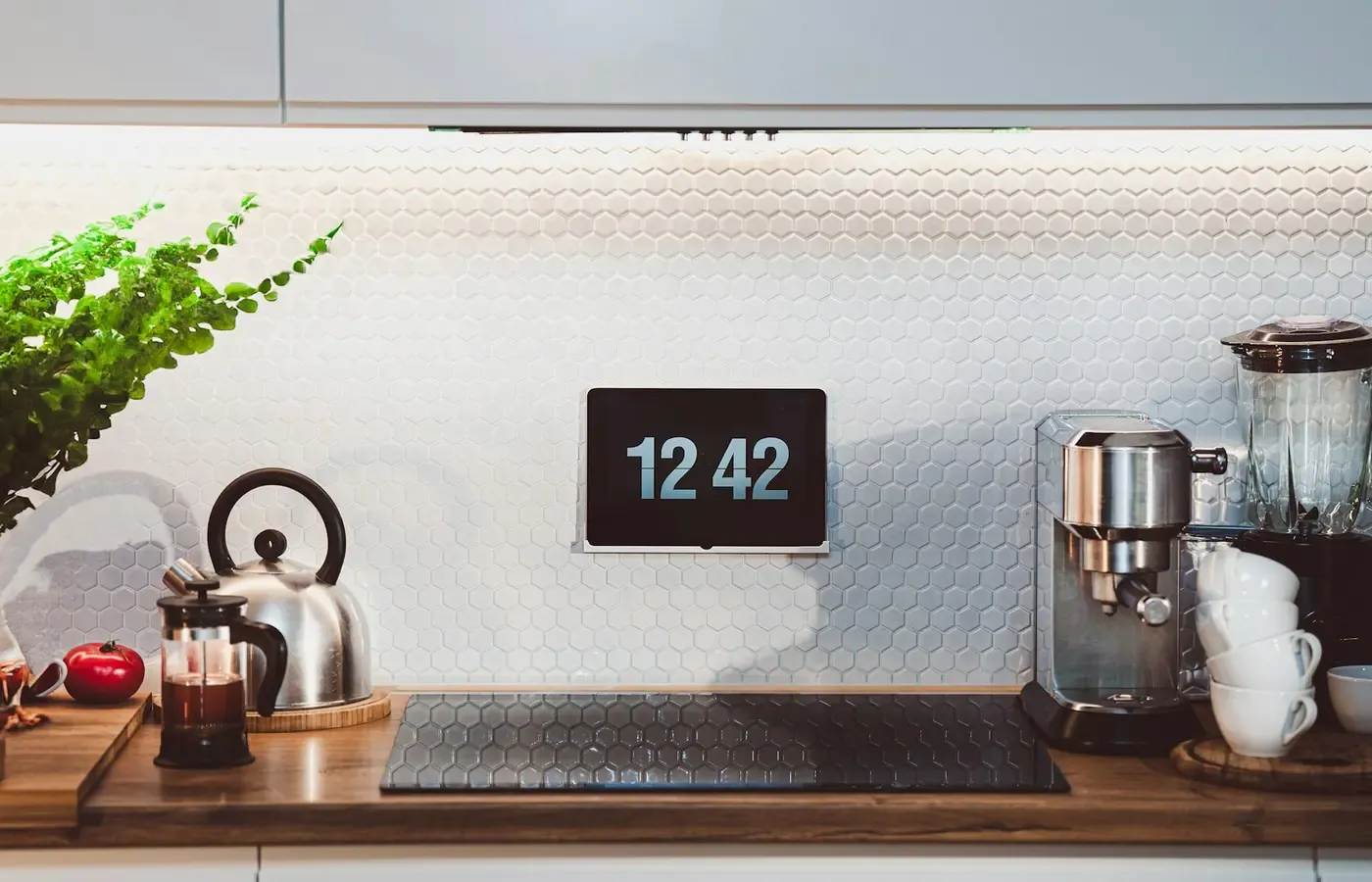

The modern home can absorb almost any object we are willing to buy. A countertop appliance promises to remove one step from breakfast. A connected washer offers a dozen cycles we may never use. A vacuum arrives with an app, a subscription filter and a proprietary battery. None of those features are automatically bad. The problem is that the purchase is often judged at the moment of unboxing, while the real value of a household product is revealed years later.
A better definition of an “essential” starts with endurance. It does the job repeatedly, it can be cleaned without ceremony, its consumables are available at normal prices, and when something predictable wears out there is a realistic path to repair.
That sounds less exciting than a launch video. It is also where most of the money is.
Start with the task, not the category
Before comparing products, write down the job in one sentence. “I need a blender” is a category. “I need to puree soup twice a week and crush ice occasionally” is a job. “I need a robot vacuum” is a category. “I need the downstairs floor picked up between deeper cleans because pet hair accumulates daily” is a job.
The distinction matters because feature lists expand faster than needs. Once you know the job, sort features into three columns:
- Required: the product fails your use case without it.
- Useful: it improves a task you already do.
- Decorative: attractive in a showroom, but unlikely to change how you live.
If a more complicated product does not meaningfully improve the required column, simplicity has economic value. Fewer pumps, screens, cloud services, motorized hinges and proprietary accessories can mean fewer failure points.
Reliability is a specification, even when it is not on the box
Consumer Reports says reliability ranks unusually high in its appliance surveys—more important to many members than price or performance. That is rational. A dishwasher that cleans brilliantly for two years and then requires an expensive control board can be worse value than a slightly less glamorous model that performs consistently for a decade.
Reliability data is never perfect. New models may not have long histories, product lines change, and individual units fail unpredictably. Still, there are better signals than star ratings from the first week of ownership.
Look for:
- long-running owner surveys rather than launch reviews;
- common failure modes, not just an average score;
- parts availability and service-network coverage in your area;
- whether the model family changes constantly;
- whether routine wear items—filters, seals, brushes, batteries—can be bought without buying a new machine.
A useful review should tell you what is likely to fail and what happens next.
Repairability belongs in the purchase price
The FTC’s right-to-repair work has documented a familiar set of restrictions: glued-in components, unavailable spare parts, proprietary tools and diagnostics, and warranty language that can discourage independent repair. The agency has also emphasized that federal warranty law generally does not let a manufacturer condition warranty coverage on the use of a particular branded part or service unless that required item or service is provided free.
For a consumer, the practical lesson is simple: investigate repair while the product is still working.
Search the model number plus “replacement part,” “service manual,” and the name of a likely wear component. Check whether a battery, pump, belt, heating element, gasket or brush assembly is sold separately. Call one independent repair shop and ask whether they work on the brand. If the answer is “we cannot get parts,” that is useful information before checkout.
For a $40 item, repair economics may not matter. For a refrigerator, range, washer, air conditioner, vacuum, coffee machine or premium power tool, they can dominate the lifetime cost.
Energy use is not a side note
An appliance has two prices: the number on the receipt and the cost of running it.
U.S. energy labels and standardized testing exist because small efficiency differences compound over years. For high-use products—refrigeration, water heating, laundry, heating and cooling—compare estimated annual energy consumption, not just a marketing badge. The exact dollar estimate will depend on local rates, but the consumption figure gives you a common basis for comparison.
Efficiency should also be judged in context. Replacing a functioning appliance solely to chase a modest efficiency gain can impose a large upfront cost and creates another discarded product. The smarter question is often: when replacement is already justified by failure, capacity or operating cost, which efficient model also has a credible reliability and repair story?
The anti-feature checklist
Some of the most useful questions are about what a product does not require.
Does the core function work without an account? Can you start the washer from its own controls? Can the air purifier run if the manufacturer’s server disappears? Is the filter a standard size? Can the light accept a replaceable bulb? Does the oven still bake if a touchscreen fails?
Connectivity can be valuable when it solves a real problem—remote temperature alerts for a freezer, for example. It becomes a liability when a basic function depends on software support that is shorter than the expected life of the physical product.
For long-lived household goods, favor graceful failure: if the “smart” layer stops working, the appliance should remain useful.
Materials: familiar beats mystical
Premium household goods are often sold through material storytelling. “Aerospace-grade,” “professional,” “natural,” “antimicrobial,” “eco,” and “chef-inspired” can all be meaningful in specific contexts, but they are not substitutes for construction details.
Ask more literal questions.
Can the surface be refinished? Will a coating chip? Is a handle mechanically attached or permanently bonded? Is a plastic hinge carrying a heavy load? Can the fabric cover be removed and washed? Does the pan require a care routine you will actually follow? Does the finish show every scratch?
A durable object fits both the physics of its task and the habits of its owner.
Buy the service ecosystem, not just the machine
Two identical-looking appliances can deliver different ownership experiences because of what happens after the sale.
Before a major purchase, record:
- warranty length and what it actually covers;
- who provides in-home service;
- typical diagnostic or call-out fees;
- availability of parts after the warranty;
- return window and restocking conditions;
- whether installation is required for warranty coverage;
- dimensions of the access route into your home, not only the installation space;
- cost and availability of consumables.
This is especially important for products that are difficult to ship back. A good return policy for headphones is not the same thing as a good service plan for a 300-pound refrigerator.
A room-by-room filter
Kitchen. Pay for temperature control, stable heating, easy cleaning and reliable moving parts. Be skeptical of screens that duplicate a phone. For small appliances, ask whether a single multifunction tool replaces several one-purpose gadgets.
Laundry. Capacity, water extraction, cycle performance and serviceability matter more than an enormous program list. Measure doors, hoses and ventilation before delivery.
Cleaning. For vacuums and floor-care products, consumables are the hidden subscription. Price filters, bags, rollers and batteries over several years.
Climate. Air conditioners, heaters, fans and air purifiers run for long hours. Noise, energy use, filter availability and control simplicity are everyday features.
Lighting. A replaceable light source and standard fitting can outlive a fashionable integrated fixture. If integrated LEDs are used, look for a credible rated life and replaceable driver where possible.
Repair or replace?
There is no universal percentage rule. Use four inputs instead:
- Age: how much useful life is reasonably left?
- Repair cost: including labor, transport and diagnosis.
- Failure pattern: is this a one-off worn part or the beginning of repeated failures?
- Replacement benefit: would a new product materially improve safety, energy use, capacity or performance?
A repair that buys five more years from a well-built appliance can be excellent value. Repeatedly repairing a chronically failing unit can be false economy.
Keep maintenance records. They turn an emotional decision—“this thing is always breaking”—into evidence.
The E/CONSUMER home-essential test
Before checkout, a product should be able to answer six questions:
- What repeated problem does it solve?
- How often will we use it?
- What will it cost to operate and maintain?
- What predictable component will wear first?
- Can that component be replaced?
- If the company disappears, how much of the product still works?
If those answers are strong, aesthetics and delight are allowed to matter. A home should not be a laboratory for self-denial. But usefulness deserves the first vote.
The best household objects do not constantly announce their innovation. They become infrastructure: the lamp that turns on, the pan that cooks evenly, the washer that can be serviced, the tool whose battery can be replaced. Their luxury is not novelty. It is the absence of friction.
Sources & methodology
Reporting and fact-checking for this rewrite were updated in August 2026. The original publication date is retained in frontmatter to preserve the site’s existing editorial chronology.
- Nixing the Fix: FTC Report to Congress on Repair Restrictions — Federal Trade Commission.
- Nixing the Fix: Warranties, Mag-Moss, and restrictions on repairs — Federal Trade Commission.
- FTC Testifies Before California State Senate on Right to Repair — Federal Trade Commission.
- Guide to Appliance Reliability — Consumer Reports.
- Affordable Energy for Consumers — U.S. Department of Energy.