
Palm oil is easy to consume without deliberately choosing it. It can help a biscuit crumble, keep bread soft, stop peanut butter separating and give instant noodles their familiar preparation and texture. Its usefulness to manufacturers—not one conspicuous category of food—explains much of its reach.
That reach creates an awkward consumer decision. Palm oil production has been associated with deforestation and the loss of wildlife habitat, yet the crop is exceptionally productive and replacing it with another oil is not automatically a lower-impact solution. Meanwhile, a claim of “sustainable palm oil” can describe different levels of certification, disclosure and traceability.
The practical task is therefore not simply to assemble a blacklist of foods containing palm oil. It is to understand what the ingredient does, identify it as reliably as the label allows, and judge the sourcing evidence behind any environmental claim.
The source for this feature was published on 15 October 2020. Formulations, labels and corporate sourcing policies can change, and the source does not provide current brand-by-brand verification or establish rules for a particular market. Check the package and the manufacturer’s current sourcing information before making a decision.
Why manufacturers use palm oil
Palm oil combines several properties that would otherwise require different ingredients or additional processing.
It has a largely neutral flavour and is semi-solid at room temperature. That makes it useful in baked goods, spreads and fillings where liquid oil would not produce the desired structure. Other vegetable oils may need partial hydrogenation to become more solid, a process that can create trans fatty acids. Palm oil can provide solidity without that step.
It also resists oxidation comparatively well. Oxidation causes oils to deteriorate and develop unwanted flavours and smells, so stability can help a product survive storage and transport. In other foods, palm oil is used to manage melting, prevent sticking or maintain a consistent texture.
Cost matters too. Oil palm produces a large amount of oil from a given area: the source describes it as roughly nine times as productive per hectare as the next most productive oil crop. It also says oil palm may require less fertiliser and pesticide than common alternatives. Those advantages help explain why manufacturers can use it economically at large scale.
None of these properties makes palm oil necessary in every product. They explain why it is difficult to replace without changing cost, texture, shelf life or the amount of land required to produce an alternative oil.
Foods in which palm oil commonly appears
A product category alone cannot tell you whether a particular item contains palm oil. Recipes vary among brands, markets and versions, and they change over time. The following are categories in which the source says palm oil is commonly used; the ingredient list remains the more useful evidence.
Biscuits, bread and other baked goods
Palm oil can “shorten” dough, producing the crumbly texture associated with many biscuits and cookies. Its semi-solid consistency also makes it useful in pastry, cakes, crackers, doughnuts, pizza bases, waffles and pancakes.
In bread, it may support loaf volume and softness. In cake, its resistance to oxidation can help preserve quality while also contributing to moisture, volume and texture.
Vegetable shortening is another obvious application. Palm oil is solid at room temperature and can provide the thick consistency required for cooking and baking.
Spreads, chocolate and dairy alternatives
Palm oil helps give margarine and other spreads structure while reducing separation and oxidation. Peanut butter manufacturers may add it to keep the nut’s natural oil mixed with the solid portion, producing a spread that does not need stirring.
In chocolate spread, palm oil contributes smoothness and can help the product remain stable in warmer conditions. It is also used in some chocolate products for appearance and resistance to melting.
Ice cream, whipping cream and non-dairy creamers may use palm oil for thickness, smoothness and stability. In these products, it can replace or supplement dairy fat. That functional role should not be confused with the product’s nutritional quality, which depends on the whole formulation rather than one ingredient.
Cereals, snack foods and convenience meals
Palm oil can help cereal remain crisp and is used to roast nuts or fry crisps. Microwave popcorn may use it for flavour and to help with popping.
It also appears in instant noodles, frozen meals, dry or canned soups, stock cubes and gravy granules. Depending on the product, it may serve as frying oil, provide thickness, prevent sticking or improve stability during storage.
The source says an average pack of instant noodles contains 20% palm oil, but it does not provide the market, sample or measurement method behind that figure. Treat it as an indication that palm oil can be a substantial ingredient in this category, not as a reliable description of every packet.
Breakfast bars and other products designed for transport
Palm oil’s melting characteristics can help breakfast bars retain their shape during transport. Similar stability explains its use in products expected to remain consistent across storage conditions.
Some fast food is also cooked in palm oil because it tolerates frying temperatures and can produce a less greasy-feeling result. Whether a restaurant or product uses it cannot be assumed from the category alone.
Infant formula, pet food and supplements
The source also identifies palm oil as an ingredient in some infant formula, pet food and vitamin products. These are categories in which formulations and individual needs can differ substantially.
For infant formula in particular, the source says palm oil is used to reproduce a fatty acid found in human milk and to provide a creamy texture. It does not support treating every formula as equivalent or choosing one solely by the presence or absence of palm oil. Use the exact product label and appropriate professional guidance where feeding or medical needs are involved.
Reading the ingredient list is harder than spotting “palm oil”
The clearest indication is an ingredient explicitly named as palm oil. But the source warns that palm-derived ingredients and fatty-acid compounds can appear under around 200 names.
It suggests watching for four word fragments:
- Palm
- Stear
- Laur
- Glyc
These fragments may help identify compounds that can be made from palm oil. They are not definitive proof of origin, however. A technical ingredient name does not necessarily tell you which crop supplied its raw material, and the source does not provide a verified list connecting every derivative to palm.
That distinction matters. A label can establish that a product explicitly contains palm oil, but it may not resolve the origin of every emulsifier, fatty acid or processed derivative. If avoiding palm-derived ingredients is important to you, a manufacturer may need to confirm the feedstock and sourcing chain.
The reverse is also true: a package saying “palm oil free” answers a narrow ingredient question, not the wider environmental one. It does not, by itself, show what replacement oil was used, how much land it required or how it was produced.
The environmental problem is production, not functionality
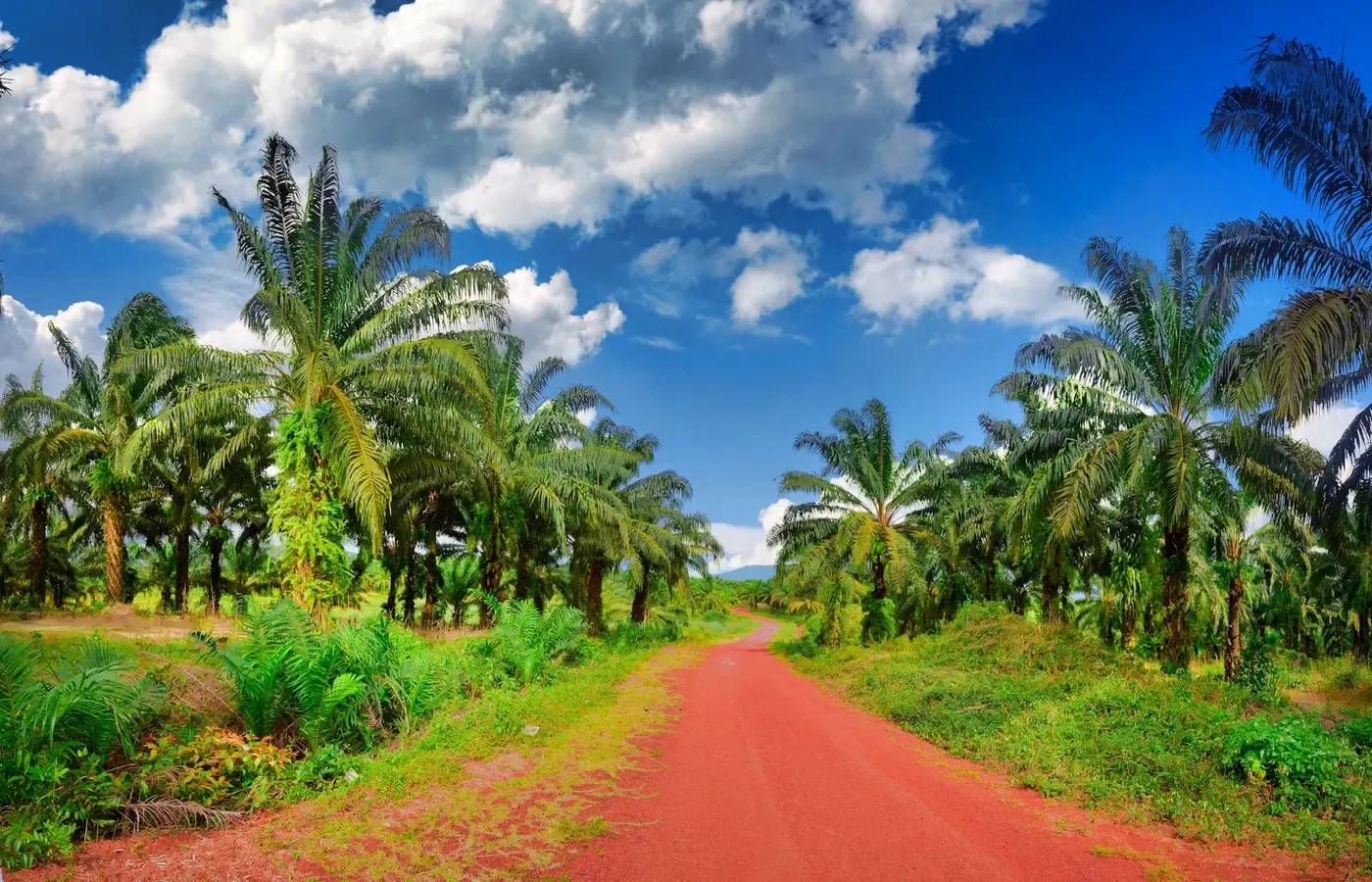
Palm oil’s environmental controversy comes from the expansion of plantations into biodiverse forests. The source describes production as a major driver of deforestation and habitat loss affecting orangutans, pygmy elephants and Sumatran rhinos.
Demand has been enormous. The 2020 source says palm oil was the world’s most consumed vegetable oil and that 72% of it was used by the food industry. It also cites a 2015 report from the Roundtable on Sustainable Palm Oil predicting that worldwide use could more than double by 2030 and triple by 2050.
Those projections are dated and should not be read as a current measurement. They nevertheless illustrate the central tension: palm oil is widely used because it delivers a great deal of oil from limited land, but plantation expansion can be highly destructive when forests are cleared.
A simple boycott does not settle that tension. Because oil palm is unusually productive per hectare, replacing the same quantity with a less productive oil may require more farmland. The practical environmental question is therefore both which oil a product uses and how and where that oil was produced.
What “sustainable palm oil” can—and cannot—show
The Roundtable on Sustainable Palm Oil, commonly known as RSPO, provides a certification system for palm oil. Certification offers consumers and companies a sourcing signal, but the source reports criticism of RSPO’s standards, auditing and enforcement.
That does not make certification meaningless. It means the label should be treated as one piece of evidence rather than a complete guarantee.
The source argues that a responsible company should certify all possible palm products in its global supply chain and provide something further, such as:
- disclosure of the volume of palm products it uses;
- publication of suppliers;
- traceability to the mill;
- evidence that the commitment covers derivatives as well as plainly named palm oil.
Other initiatives, including the Palm Oil Innovation Group and the High Carbon Stock approach, seek standards beyond basic RSPO requirements. Organic certification is another sourcing signal mentioned by the source, although “organic” and “sustainable” do not answer precisely the same question.
For a consumer, the quality of a claim improves when it becomes specific. “We support sustainable palm oil” says little about coverage or traceability. A statement identifying certification, geographic scope, suppliers, quantities and progress leaves more that can be checked.
A better decision than “palm oil: yes or no?”
There is no single answer for every household or product. Instead, match the decision to the reason you care.
If you want to avoid palm oil
Start with the ingredient list, looking first for an explicit reference to palm oil. Treat unfamiliar compounds as questions rather than proof, and ask the manufacturer about their source when necessary.
Remember that recipes change. Recheck products periodically rather than relying indefinitely on an old list or a brand’s past formulation.
If you want to support improved sourcing
Look beyond a general sustainability statement. Check whether certification covers the company’s full global supply chain and whether it includes derivatives. Supplier disclosure and mill-level traceability provide more accountability than an unexplained logo alone.
If you mainly want a less processed food
Palm oil may be a useful clue, but it is not a complete measure of processing or nutritional quality. Compare the full ingredient list and the job the food performs for you. A palm-oil-free replacement may still be highly processed, while a product containing palm oil may meet a practical need at an acceptable cost.
If a current product works for you
There is no need to discard food already bought. Use it, then check the label and sourcing information when replacing it. Switching products only has value if the alternative better fits your priorities and its claims stand up to inspection.
The useful test is transparency
Palm oil is common because it solves real manufacturing problems: solidity, texture, frying performance, shelf stability and cost. Those benefits help explain its persistence, but they do not erase the environmental damage associated with poorly governed plantation expansion.
For shoppers, the strongest choice is rarely based on a long list of supposedly palm-containing foods. Product categories are only a prompt to inspect the package. The better test is whether the label clearly identifies the oil and whether the manufacturer can explain certification, coverage and traceability without hiding behind a broad sustainability claim.
Palm oil can be efficient and destructive at the same time. A credible purchasing decision has to hold both facts in view.