
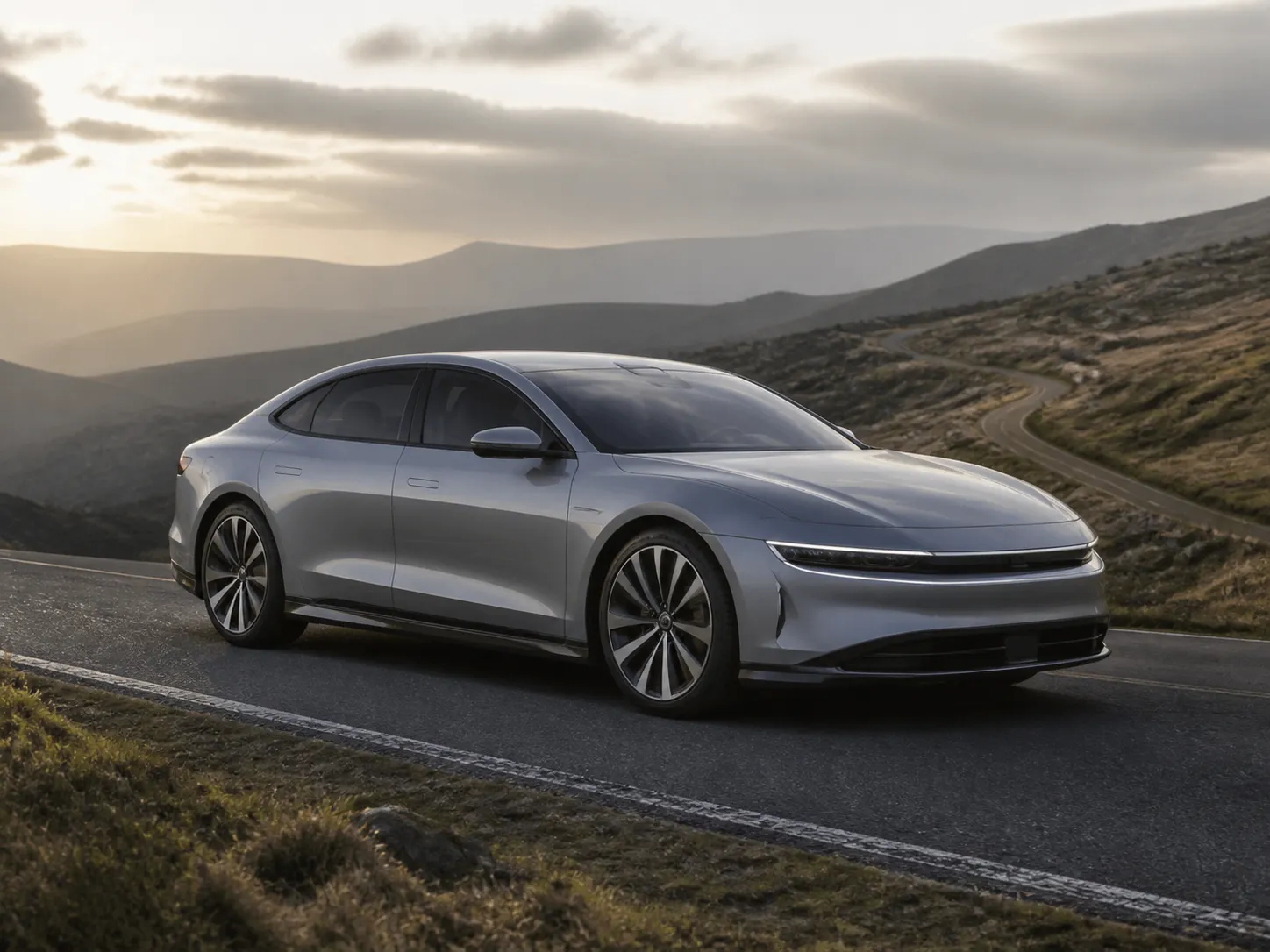
Electric cars have moved beyond the stage where the useful question is “Are EVs the future?” In 2025, more than 20 million electric cars were sold globally, according to the International Energy Agency, representing roughly one in four new cars. The harder question for a household is smaller and more practical: does an electric car fit the way we drive, park, charge and pay for a vehicle?
That is a better buying question because the global trend can be true while an individual purchase is still wrong.
Range is becoming a less useful status symbol
The IEA says the global sales-weighted average range of battery-electric cars is now close to 380 kilometers and has been plateauing. That is not necessarily a sign of stalled progress. Average daily driving is far below that in many markets, while charging networks and charging speeds have improved.
A bigger battery solves a specific problem: needing to travel farther between charges. It also usually adds cost and weight.
Before shopping by maximum range, reconstruct a normal month:
- weekday round-trip distance;
- weekend driving;
- how often you make journeys beyond 150, 250 or 400 kilometers;
- winter or extreme-heat conditions;
- towing or heavy-load needs;
- where the car sits for the longest continuous period.
The best range is enough range plus a margin. Buying hundreds of kilometers you rarely use can be an expensive form of reassurance.
Charging access is the real dividing line
For many owners, an EV with dependable home charging is a fundamentally different product from an EV that relies on public fast charging.
Home charging turns refueling into a background task. The car sits for hours anyway; electricity is added while you sleep. Public-only ownership requires planning around station location, price, reliability, queues and charging speed.
Before buying, answer the infrastructure question with addresses, not optimism.
If you live in a house, get an installation quote and check electrical capacity. If you rent or use a shared garage, obtain written confirmation of what can be installed. If you expect to rely on public charging, visit the stations you would actually use at the hours you would actually use them. Look at pricing and recent reliability reports.
Do this before the test drive.
Fast-charging numbers need context
A peak charging rate is not the same as a consistently fast road-trip stop. Battery temperature, state of charge, charger output and the vehicle’s charging curve all matter.
A useful comparison is the time required to add a realistic amount of range during the part of the battery you normally use on a trip. Reviews that graph the charging curve are more informative than a single peak number.
Also check route-planning quality. A car that accurately predicts arrival charge, preconditions its battery and integrates charger status can be easier to road-trip than a car with a slightly larger battery but poorer software.
Reliability is still part of the transition story
EV powertrains can have fewer routine mechanical-service items than combustion vehicles, but the car around the powertrain can still fail. Consumer Reports’ recent reliability work has repeatedly shown that newer EV and plug-in hybrid designs have, on average, experienced more problems than mature gasoline or conventional hybrid platforms in its surveys, with infotainment and new technology contributing to the gap.
Do not translate “fewer moving engine parts” into “nothing can go wrong.”
Research the exact model year. New platforms deserve extra scrutiny. Look for recalls, charging-system issues, 12-volt battery failures, climate-control problems, suspension wear, software glitches and service delays.
A mature EV can be a very different ownership proposition from a first-year model built on a brand-new architecture.
Battery health matters—but warranty language matters more
Consumers often treat the traction battery as a mysterious single failure waiting to happen. In practice, degradation is gradual and affected by chemistry, temperature, charging habits and use.
For a new car, read the battery warranty. Note both time and mileage limits and any capacity-retention threshold. Ask what diagnostic measure the manufacturer uses if a capacity claim is made.
For a used EV, battery state is one of the most important pieces of due diligence. Seek a battery-health report where available, review remaining warranty coverage, and test charging. A cheap used EV with reduced range may still be excellent for predictable local driving; the discount is only a problem if the buyer needs the range that has disappeared.
Do the total-cost calculation honestly
“Electricity is cheaper than gasoline” can be true and still produce a misleading purchase decision.
Build a five-year worksheet with:
Acquisition: transaction price, financing, taxes and incentives actually available to you.
Depreciation: the likely difference between purchase and resale value. This can dwarf energy savings.
Insurance: get a quote on the exact vehicle before buying.
Energy: use your home electricity rate, expected public-charging share and realistic efficiency.
Maintenance and tires: EVs avoid some engine maintenance, but heavy, powerful vehicles can be hard on tires.
Home charging equipment: include electrical work, permits and hardware.
Registration and road-use fees: some jurisdictions charge EV-specific fees.
The correct result may be “EV saves money,” “hybrid is cheaper,” or “the EV costs more but we prefer it.” All three are legitimate outcomes. What matters is knowing which one you are choosing.
A conventional hybrid is not a failed compromise
For a household with no reliable place to charge, frequent long-distance driving, or a budget that does not align with available EVs, a conventional hybrid can reduce fuel use without changing refueling behavior.
Consumer Reports’ survey data has also shown conventional hybrids can be highly reliable because many current systems are mature.
The useful comparison is not ideological. Put a battery EV, a hybrid and an efficient gasoline model that all satisfy the same job into the same cost and use-case sheet.
Then eliminate the ones that create daily friction.
Size matters more than the badge
Electrification does not repeal physics.
Large SUVs need more material, more battery and more energy to move. The IEA notes that large cars and SUVs account for a large share of global EV sales. If a smaller car meets the same household need, it usually requires fewer resources to buy and operate.
Do not use the powertrain label to stop asking normal car questions:
- Is the vehicle larger than we need?
- Can everyone see out of it safely?
- Are replacement tires unusually expensive?
- Does it fit the garage?
- Is the payload or towing rating adequate?
- How much energy does it actually consume per distance?
Efficiency among EVs matters.
The road-trip test
A twenty-minute dealership loop is a weak EV test.
Before buying, plan your most common long trip in the vehicle’s route planner and at least one independent charging map. Identify chargers, backup locations and expected arrival percentages. If possible, rent the model or a similar EV for a weekend and actually charge it.
Pay attention to:
- navigation accuracy;
- charging-port location;
- cable reach;
- payment experience;
- cold- or hot-weather range change;
- rear-seat climate comfort;
- road noise;
- driver-assistance behavior;
- phone-key reliability;
- the quality of physical controls.
The best way to cure—or confirm—range anxiety is to replace abstraction with a real trip.
Used EVs can be the value story
Depreciation that hurts the first owner can help the second.
A used EV can deliver quiet operation, strong performance and low home-charging costs at a much lower acquisition price. But the inspection must be EV-specific.
Check remaining battery and vehicle warranty, DC fast-charging capability, charge-port standard and adapter support, software support, accident history, tires, underbody/battery enclosure damage, recall completion and battery-health information.
Also check whether a model was originally sold with features that later became subscriptions or software-locked options. Used-car value should include what is actually enabled.
A 2026 EV buying scorecard
Give each candidate a score from 1 to 5 on:
- home/work charging fit;
- real-world range margin;
- road-trip charging;
- reliability history;
- service access;
- battery warranty;
- insurance cost;
- five-year total cost;
- size/efficiency;
- software support;
- physical usability.
Weight charging fit and total cost twice. A spectacular 0–60 time cannot compensate for nowhere convenient to charge.
The bottom line
The EV market’s progress is real: sales are larger, model choice is broader, batteries continue to evolve and infrastructure is improving. But mature consumer advice should become less evangelistic as a technology becomes mainstream.
The right electric car is not the one with the most range, the largest screen or the strongest environmental symbolism. It is the one that can sit where you park, charge where you live, cover the driving you actually do and make financial sense under assumptions you can defend.
When those pieces align, EV ownership can feel unusually simple. When they do not, no amount of headline range fixes the mismatch.
Sources & methodology
Reporting and fact-checking for this rewrite were updated in August 2026. The original publication date is retained in frontmatter to preserve the site’s existing editorial chronology.
- Global EV Outlook 2026 — Trends in electric cars — International Energy Agency.
- Global EV Outlook 2026 — Executive summary — International Energy Agency.
- Global EV Outlook 2026 — Electric vehicle batteries — International Energy Agency.
- Hybrid & EV Buying Guide — Consumer Reports.
- Will an Electric Car Save You Money? — Consumer Reports.
- Buying a Used Electric Vehicle: What to Know — Consumer Reports.