This article is not ready for publication. The supplied Research Package contains no sources, URLs or model-specific documentation, so the central consumer claims cannot be verified to E/CONSUMER’s standard.
Why there is no universal grace period
A responsible guide cannot prescribe a fixed number of safe days, months or years after phone security updates end. Any defensible assessment would require dated evidence identifying the exact handset model and variant, the market in which it was sold, its operating-system version, its last installed security-patch level and the manufacturer’s current support status.
The date of the last update would not, by itself, answer every relevant question. Research would also need to establish whether later vulnerabilities affect that particular software version, what conditions an attack requires and whether authoritative records report active exploitation. Without those details, the article could confuse the absence of promised future fixes with evidence of a present, exploitable flaw or proof that a specific phone has been compromised.
Support status can also differ by model, carrier, region or software branch. A general statement about a phone family may therefore be inadequate for a reader trying to evaluate one device.
Three issues that must remain separate
An older phone may present several distinct ownership questions, but the empty Research Package does not support conclusions about any particular handset.
- System support: The operating system or device firmware may no longer receive security patches or version upgrades. This must be confirmed through official support policies, update notices or security bulletins.
- Application compatibility: Individual applications may set their own minimum operating-system requirements. Current requirements should be checked with each developer, especially for banking, authentication, workplace and communications services.
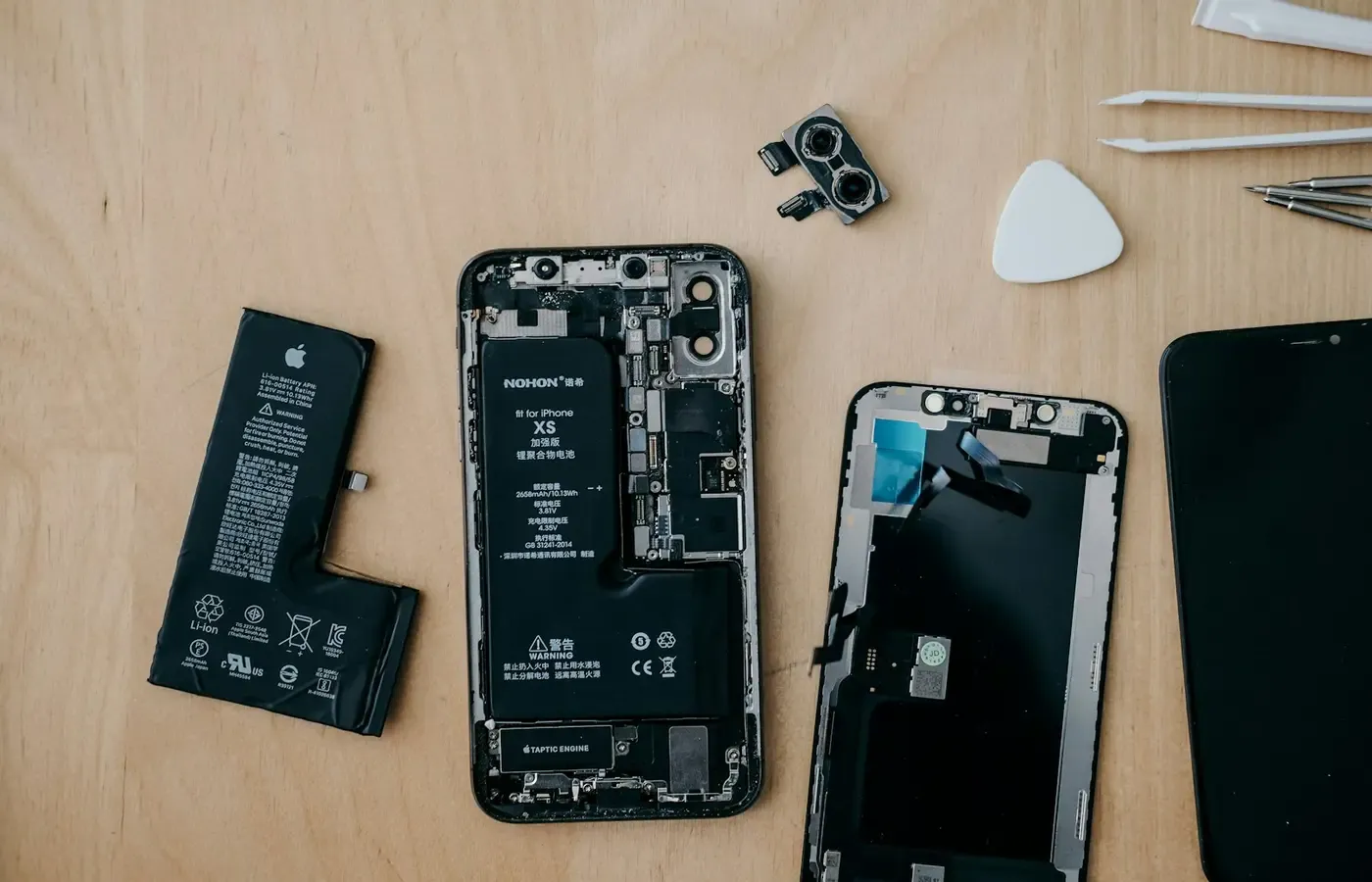
- Hardware condition: Battery runtime, charging behavior and general reliability concern the physical condition of the device. They should not be treated as evidence of software security, and improving the battery would not establish that unsupported system software is protected.
These categories can overlap in a purchase or replacement decision, but they are not interchangeable. A functioning battery does not document security support. An application that still opens does not prove that the operating system is receiving patches. Conversely, an application ending support does not, without further evidence, establish that the phone has already been attacked.
What must be verified for an individual phone
Before giving advice, the guide would need a reproducible identification process. That process should record:
- The full model name and model number rather than only the product family.
- The country, carrier or sales market when those details affect software delivery.
- The installed operating-system version and displayed security-patch level.
- The manufacturer’s dated support policy for that exact device or eligible product group.
- Any relevant update history, security bulletin or end-of-support notice.
- The current minimum requirements of applications the owner considers essential.
- Official repair eligibility, battery-service terms, parts availability and quoted costs in the owner’s market.
The resulting information must then be compared by date. An old support page, app-store listing or repair document may no longer describe current availability. Screenshots or recollections alone would not replace authoritative documentation.
Why common workarounds need evidence
The article should not imply that antivirus software, cautious browsing, deleting applications, performing a factory reset or replacing a battery compensates for unsupported system software. The supplied research contains no evidence establishing such equivalence.
A reset may be relevant to migration or data removal, while a battery replacement may address runtime or another hardware symptom. Those are different purposes. Claims about what either action does for security would require appropriate technical and official support documentation.
Likewise, recommendations to keep a phone for limited tasks or repurpose it as a connected device would still require a risk assessment. The intended accounts, data, network access and applications would matter, and none of those circumstances is documented here.
Decisions that require current policies
Advice involving banking, authentication or workplace access must reflect the rules of the relevant bank, application provider or employer. The guide cannot assume that every service permits the same operating-system versions or responds to unsupported devices in the same way.
Repair and replacement comparisons also need local information. Service eligibility, available parts, prices, trade-in conditions and recycling programs may vary by device and market. Migration, account removal, data erasure, resale and recycling instructions should come from the relevant manufacturer, platform provider, carrier, retailer or public authority rather than from unsupported generalizations.
Evidence required before publication
Publication should resume only after the research package includes:
- Official support policies and security bulletins for clearly identified phone models, variants and markets.
- Operating-system documentation explaining patch levels, version upgrades and update delivery.
- Dated vulnerability records identifying affected versions, attack requirements and reported exploitation status.
- Current operating-system requirements for representative banking, authentication and communications applications.
- Official battery-service, repair, migration, account-removal, erasure and recycling instructions.
- Government, regulator or other authoritative consumer-security guidance concerning unsupported connected devices.
Until those materials are available, a definitive deadline would exceed the evidence. The only supportable conclusion is that the answer must be model-specific, date-specific and tied to the owner’s actual applications and uses.