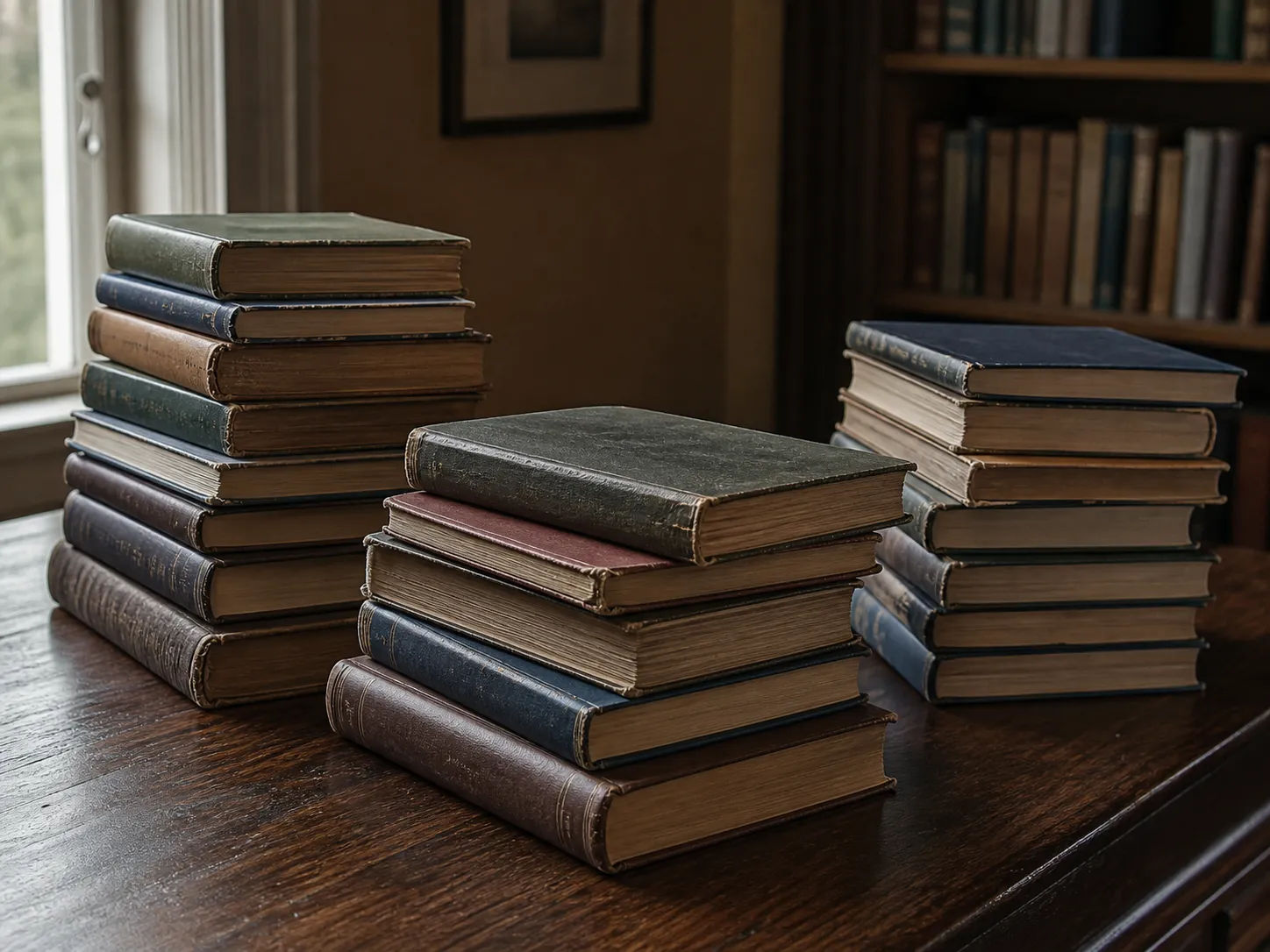
The hardest problem in reading is no longer finding a book. It is deciding which book deserves a finite week of attention.
Pew Research Center reported in 2026 that three-quarters of U.S. adults had read at least part of a book in the previous 12 months. Print remained the most common format: 64% had read a print book, compared with 31% for e-books and 26% for audiobooks. Meanwhile, Publishers Weekly reported 762.4 million print units sold through outlets tracked by Circana BookScan in 2025. The market is not short of supply, discovery engines or enthusiasm.
The consumer problem is abundance.
A useful “books worth your time” guide therefore should not begin with a universal top ten. It should help you distinguish between books worth buying, books worth borrowing, books worth listening to, and books worth leaving unfinished.
Separate discovery from acquisition
A recommendation is not yet a purchase decision.
Books arrive through algorithms, BookTok, prize lists, podcasts, friends, newsletters, airport displays and the front table at a bookstore. Those channels answer “what is visible?” more reliably than “what will be valuable to me?”
Create a small holding queue. When a title catches your attention, save it for several days before buying. During that interval, read a serious review, look at a sample, check the library, and ask what you want from it: information, argument, escape, language, reference, companionship, or participation in a cultural conversation.
The pause is not anti-shopping. It is quality control.
Use critics as filters, not authorities
The best curated lists expose you to books outside your own recommendation loop. NPR’s Books We Love project is useful partly because it is not organized as a single ranked verdict. Staff and critics nominate titles, then readers can filter by qualities and interests.
That model is worth copying personally.
Maintain several trusted routes into books:
- a newspaper or magazine critic whose taste you understand;
- a librarian or bookseller who reads across categories;
- a specialist publication for a subject you care about;
- a friend whose disagreements with you are informative;
- one broad annual list designed for browsing rather than ranking.
The goal is not to eliminate bias. It is to diversify it.
Buy for rereading, reference or attachment
A physical book earns shelf space when ownership improves the experience.
Buy when you expect to annotate it, revisit passages, lend it, use it as a reference, care about the edition as an object, or know that seeing it on the shelf will prompt future use. A cookbook covered in notes, a field guide, a design monograph and a novel you reread every few years have different functions, but all justify durable access.
Borrow when curiosity is the main motive. Libraries are one of the best anti-regret mechanisms in consumer culture: they let you explore a subject before deciding whether you need permanent ownership.
For expensive nonfiction, art books and academic titles, borrowing first is especially sensible.
Format changes the value proposition
Print, e-book and audiobook are not interchangeable containers.
Print offers spatial memory, easy flipping, durable ownership and fewer digital distractions. It also requires storage and is less convenient to travel with.
E-books are searchable, portable and often better for instant access, adjustable type and travel. But rights can be platform-dependent, and the resale or lending experience differs from a paper object you own outright.
Audiobooks convert commuting, walking and chores into reading time. Narration can deepen memoir, performance and dialogue. For technical material with diagrams, footnotes or frequent reference, audio may be a poor primary format.
Before paying, choose the format for the way you will consume the work, not the format you habitually buy.
Edition matters more than many buyers realize
For classics, translated literature, poetry, scholarly works and heavily illustrated books, “the title” may describe several substantially different products.
Compare:
- translator;
- editor and introduction;
- notes and apparatus;
- typography and page size;
- image reproduction;
- binding;
- abridged versus unabridged text;
- audiobook narrator;
- digital rights and accessibility features.
A cheap edition can be perfect for a first encounter. For a book you expect to keep for decades, pay for the edition you actually want to live with.
The ten-page test
Samples are consumer protection.
For prose, read enough pages to encounter the actual rhythm of the book—not only the jacket copy and opening hook. For nonfiction, inspect the contents, index, bibliography and a middle chapter. An argument that looks fresh in a two-paragraph excerpt may turn out to be a 250-page expansion of one idea.
Ask:
- Does the author show evidence or mainly confidence?
- Does the structure move the argument forward?
- Are citations transparent enough to verify?
- Does the voice make me want to continue?
- Am I learning, feeling or noticing something I could not get from a summary?
If not, leaving is rational.
Abandoning a book is not waste
The sunk-cost fallacy has a bookshelf edition: “I paid for it, so I should finish it.”
The money is already spent. The remaining cost is time.
Give yourself an exit rule. It might be 50 pages, two chapters or 20% of an audiobook. Some difficult books reward patience, so the rule should not be mechanical. But requiring every book to be finished converts reading from choice into backlog management.
A book can be good and still not be good for you now.
A better way to use bestseller lists
Bestseller lists tell you what is selling. They can reveal cultural moments, genre waves and books your friends may be discussing. Publishers Weekly’s 2025 data, for example, showed adult fiction continuing to grow and romance sales rising.
Use that information as a map of attention, not as a quality score.
When a book becomes unavoidable online, ask two separate questions:
- Why is this title circulating?
- Do I want the experience it offers?
Sometimes the answer to both is yes. Sometimes you only wanted to understand the conversation.
Build a reading portfolio
Instead of a giant to-be-read pile, keep four active lanes:
The demanding book. Something that benefits from concentration.
The pleasure book. A novel, memoir, comic or narrative work you reach for without discipline.
The practical book. Reference, skill, work or a current problem.
The wildcard. A book from a culture, era, genre or point of view outside your default.
Four is enough to create variety without turning reading into project management.
When one lane is empty, fill that lane—not the whole shelf.
Spend on the ecosystem you want
Where you buy can matter.
Independent bookstores provide browsing, events and local expertise. Libraries provide access without requiring ownership. Used-book stores keep objects in circulation and make experimentation cheap. Direct publisher and author channels can make specialist work discoverable. Large online retailers provide convenience, breadth and often lower prices.
There is no need to moralize every transaction. But if you value a particular part of the book ecosystem, allocate some of your spending to it deliberately.
The ownership audit
Once or twice a year, look at your shelves without asking whether a book is “good.”
Ask:
- Would I buy this again today?
- Will I reread or reference it?
- Is there someone I genuinely want to give it to?
- Is the information badly outdated?
- Is this edition meaningful, or merely the one I happened to buy?
A personal library becomes more useful when it is edited.
Selling, donating or giving away a book is not a failure of taste. It is what allows the shelf to remain a living system rather than an archive of past intentions.
What is worth your time?
A worthwhile book does at least one of a few things unusually well. It gives language to something you could not articulate. It changes the scale of a problem. It creates a world you are reluctant to leave. It becomes a reference you return to. It complicates an opinion rather than merely confirming it.
None of those qualities can be read directly from a sales rank.
The practical consumer advantage is that books are unusually easy to test before buying. Reviews are abundant. Samples exist. Libraries make trial inexpensive. Used copies lower the cost of ownership. And quitting has no penalty beyond admitting that your attention belongs elsewhere.
Use those advantages. The goal is not to read everything worth reading. It is to keep enough room in your life for the right book to matter.
Sources & methodology
Reporting and fact-checking for this rewrite were updated in August 2026. The original publication date is retained in frontmatter to preserve the site’s existing editorial chronology.
- Americans still opt for print books over digital or audio versions — Pew Research Center.
- Print books still dominate in the U.S., but e-books and audiobooks have grown — Pew Research Center.
- Print Book Sales Rose Slightly in 2025 — Publishers Weekly.
- Books We Love 2025 — NPR.
- About Books We Love: How the list is built — NPR.